
Key takeaways
- Using one length everywhere: A 36-inch leader may be excellent in clear water but cumbersome around docks or in heavy wind. Adjust it to the conditions.
- Making the leader too long for the rod: Excess material can hit the guides, reduce casting accuracy, and weaken a connection knot through repeated impact.
- Choosing strength by fish weight alone: A 10-pound fish beside oysters may require heavier leader than a larger fish over clean sand. Abrasion and cover often matter more than body weight.
- Ignoring lure action: Thick 30- or 40-pound fluorocarbon can restrict small plugs, spoons, and soft plastics. Use the lightest strength that safely handles the environment.
- Leaving damaged leader in service: A leader can look acceptable while having tiny cuts from shells or teeth. Replace it after contact with rough structure.
- Forgetting knot length: Measure the finished leader, not just the unknotted piece. Include the knots and trim only after they are fully tightened.
The Short Answer
For most inshore fishing, start with a 24- to 36-inch leader (61 to 91 cm). This length gives your lure or bait enough separation from the main line while keeping the leader manageable when casting, tying knots, and landing fish. A 30-inch leader (76 cm) is the best all-around starting point for redfish, speckled trout, snook, flounder, and similar inshore species.
Use a shorter leader of 18 to 24 inches (46 to 61 cm) around heavy cover, docks, grass, or strong current, where a long leader can snag or make casting awkward. Choose a longer leader of 36 to 48 inches (91 to 122 cm) in clear water, when fish are cautious, or when sharp structure and abrasion are major concerns.
Our top picks
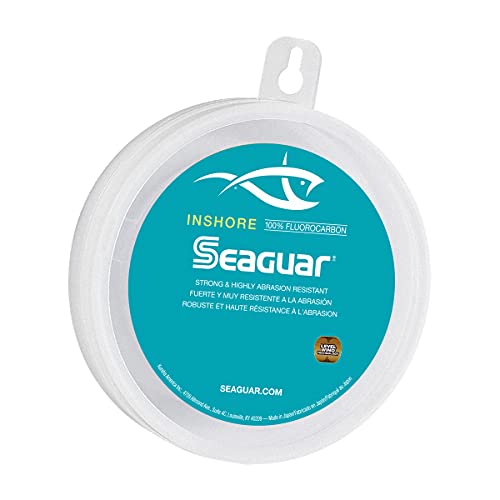

As an Amazon Associate we earn from qualifying purchases at no extra cost to you. Ratings are shown as listed on Amazon.
Leader strength matters as much as length. A practical starting range is 15- to 30-pound fluorocarbon. Move to 40-pound leader for large snook, tarpon, toothy fish, oyster beds, bridge pilings, or heavy cover. Fluorocarbon is popular because it is relatively abrasion resistant and less visible underwater than many standard monofilament leaders.
Standard Sizes
The right leader length depends on water clarity, target species, structure, and your casting setup. The table below gives useful starting dimensions rather than rigid rules.
| Leader length | Length in centimeters | Best use | Typical leader strength |
|---|---|---|---|
| 12 inches | 30 cm | Close-range casting, heavy cover, compact rigs | 20–40 lb |
| 18 inches | 46 cm | Jigs, docks, grass, and strong current | 15–30 lb |
| 24 inches | 61 cm | Clear all-around inshore starting point | 15–30 lb |
| 30 inches | 76 cm | General-purpose redfish and trout fishing | 15–30 lb |
| 36 inches | 91 cm | Clear water, wary fish, and abrasion protection | 20–40 lb |
| 48 inches | 122 cm | Very clear water, timid fish, and sharp structure | 20–40 lb |
For a spinning rod, keep the leader short enough that the connection knot stays outside the spool while casting, unless you are using a setup specifically designed to accommodate a longer leader. A leader that is too long can catch on the guides, reduce casting distance, and create inconsistent lure action.
Leader diameter increases with breaking strength. A 15-pound fluorocarbon leader is typically more subtle and easier to cast, while 30- and 40-pound material offers more resistance to oysters, barnacles, rocks, wood, and fish with abrasive mouths. Product prices vary by brand and spool size, but 100-yard fluorocarbon spools commonly range from about $15 to $25. For example, 15-pound options often sit near the lower end of that range, while 30- and 40-pound options are commonly closer to $20 to $25.
How to Measure Your Space
- Measure from the terminal connection to the lure. The leader length includes the section between the main-line connection and the lure, hook, or swivel. Do not count the main line above the knot.
- Pull the leader straight without stretching it. Fluorocarbon should be measured under light tension. Avoid sharply bending it around a ruler, because tight bends can damage the material.
- Allow for knots. Cut approximately 2 to 4 extra inches (5 to 10 cm) if you expect to tie a bulky knot at both ends. Trim the tag ends after each knot is seated.
- Check rod and reel clearance. With the lure secured, slowly reel in line. Make sure the connection knot does not repeatedly collide with the spool lip or rod tip.
- Compare the leader with your fishing environment. Hold the measured section beside the lure and examine whether it will reach nearby oysters, rocks, grass, or pilings when a fish runs.
- Inspect before every trip. Run the leader between your fingers and look for cloudy spots, nicks, rough sections, or coils. Replace damaged material rather than shortening it until it becomes impractical.
A simple measuring reference can help on the water: 12 inches is about the length of a standard ruler, 24 inches is 2 feet, 30 inches is 2 1/2 feet, and 36 inches is 3 feet. Marking a 24- or 36-inch section on your rod, measuring board, or tackle box can make replacement faster.
By Room or Use Case
Redfish in Grass Flats
Use a 24- to 30-inch leader (61 to 76 cm) in most grass-flat conditions. Pair 15- to 25-pound fluorocarbon with soft plastics, spoons, or topwater lures. If the grass is thick or the bottom contains shells, step up to 30 pounds. A shorter 18-inch leader can keep a lure from dragging through vegetation in shallow water.
Speckled Trout in Clear Water
Choose a 24- to 36-inch leader (61 to 91 cm), especially when trout are feeding cautiously in clear water. Fifteen- to 20-pound fluorocarbon is a useful balance between reduced visibility and handling strength. Use the shorter end of the range when casting repeatedly into wind, and the longer end when fish are following but not striking.
Snook Around Docks and Pilings
Snook can quickly rub through light leader material. Start with 30 to 36 inches (76 to 91 cm) of 30- to 40-pound fluorocarbon. In exceptionally heavy cover, a 24-inch leader may be easier to control, but inspect it after every fish or snag. The goal is enough abrasion protection without creating a connection knot that repeatedly catches during a cast.
Flounder and Bottom Fishing
A 12- to 24-inch leader (30 to 61 cm) generally works well for bottom rigs, jigheads, and small bait presentations. Use 15- to 25-pound material in open sandy areas and 20- to 30-pound material near shells, rocks, or bridge debris. A shorter leader can also help keep the bait close to the sinker and bottom.
Tarpon and Larger Inshore Fish
Use 36 to 48 inches (91 to 122 cm) when targeting larger fish near passes, inlets, and bridges. Forty-pound fluorocarbon may be suitable for some applications, but line strength should match the species, local structure, tackle, and any rules requiring a specific leader. Check the leader frequently for scuffs, particularly after a jump or prolonged fight.
Live Bait and Popping Corks
For live shrimp, pinfish, or other bait under a float, use 18 to 36 inches (46 to 91 cm). Choose 18 to 24 inches in current or around grass so the bait stays easier to control. Extend the leader toward 36 inches in clear, calm water when fish are inspecting the bait before striking.
Common Sizing Mistakes
- Using one length everywhere: A 36-inch leader may be excellent in clear water but cumbersome around docks or in heavy wind. Adjust it to the conditions.
- Making the leader too long for the rod: Excess material can hit the guides, reduce casting accuracy, and weaken a connection knot through repeated impact.
- Choosing strength by fish weight alone: A 10-pound fish beside oysters may require heavier leader than a larger fish over clean sand. Abrasion and cover often matter more than body weight.
- Ignoring lure action: Thick 30- or 40-pound fluorocarbon can restrict small plugs, spoons, and soft plastics. Use the lightest strength that safely handles the environment.
- Leaving damaged leader in service: A leader can look acceptable while having tiny cuts from shells or teeth. Replace it after contact with rough structure.
- Forgetting knot length: Measure the finished leader, not just the unknotted piece. Include the knots and trim only after they are fully tightened.
FAQ
Is a 12-inch leader long enough for inshore fishing?
It can be, particularly for close-range fishing around heavy cover, bottom rigs, or compact lure presentations. However, 12 inches provides less separation from the main line and less abrasion protection. For a general-purpose setup, 24 to 30 inches is more versatile.
Is a longer leader always better in clear water?
No. A longer leader can reduce the visibility of the main line near the lure, but it may also reduce casting performance and make knots harder to manage. In clear water, start with 30 to 36 inches and extend toward 48 inches only when fish are wary and your rod-and-reel setup handles the added length cleanly.
What is the best leader strength for inshore fishing?
Fifteen to 20 pounds is a practical range for trout, smaller redfish, and open-water presentations. Use 25 to 30 pounds for mixed inshore fishing, and 40 pounds around snook, tarpon, oysters, pilings, or other abrasive cover. Match the strength to structure and local regulations as well as the target fish.
How often should I replace an inshore leader?
Replace it immediately after visible nicks, roughness, severe curling, or contact with sharp structure. Even without obvious damage, recheck the final 12 to 18 inches after each fish and retie when the section feels rough. Fresh leader material is inexpensive insurance compared with losing a lure and a fish.


Write Your Review
No reviews yet. Be the first to share your experience!