
The best fishing is usually the water other people will not walk to. A mile down an overgrown trail, around the far side of the lake, or up a creek where the road ends, that is where unpressured fish live. But hiking to those spots means your gear has to ride on your back, hands free and organized, without a tackle box banging your hip or rods snagging every branch. A dedicated fishing backpack solves this: it carries your trays, tools, and water, holds your rods vertically while you walk, and shrugs off the spray and drizzle that ruins gear on the trail.
We judged these packs on rod-carry security, water resistance, storage organization, comfort under load, and how well they handle a real hike rather than a stroll from the parking lot. Below are our top backpacks for reaching remote water, followed by a buyer’s guide and answers to the questions hike-in anglers ask most.
Our top picks




As an Amazon Associate we earn from qualifying purchases at no extra cost to you.
⚡ Save on Your Next PC — Amazon Prime
Prime members get fast free shipping on the systems above, plus early access to Prime Day & Black Friday PC deals. New members get a 30-day free trial.
Watch: Top 7 Best Fishing Backpacks for Hiking to Remote Spots — Video Review
How to Choose
- Rod holders: Secure vertical rod holders keep your hands free and your tips out of the brush; loose straps let rods swing and snag.
- Water resistance: A water-resistant or waterproof shell protects reels and electronics from rain, spray, and the accidental set-down in mud.
- Tackle organization: Look for a pack that fits standard utility trays so your lures and terminal tackle stay sorted and reachable.
- Carry comfort: Padded, adjustable straps and a breathable back panel matter a lot once you are a mile in with a full load.
- Size vs. weight: Bigger packs carry more but tire you faster; match capacity to how far you hike and how minimalist you can be.
The Best Picks Reviewed
Piscifun Fishing Tackle Backpack with Rod and Gear Holder
A perennial favorite that gets the fundamentals right: secure rod holders, a water-resistant build, and enough organized storage for a full day’s tackle. It carries comfortably on a real hike and fits standard trays, making it the safe all-around recommendation for anglers heading to remote water for the first time.
Rapala Venture 13-Inch Fishing Backpack
Rapala’s Venture focuses on organized storage, with dedicated compartments for lures, tools, soft plastics, and gear so nothing rattles into a jumble on the trail. The clean layout means you can find what you need without unpacking the whole bag, a real advantage when you are standing on a rock with fish rising.
Wild River Nomad Tackle Tek LED Lighted Camo Backpack
The built-in LED lighting system sets this one apart, illuminating your trays for those pre-dawn hikes in and post-sunset walks out. In Mossy Oak camo with room for serious tackle, it is the pick for anglers who fish the low-light windows and want to see their gear when the sun is not up.
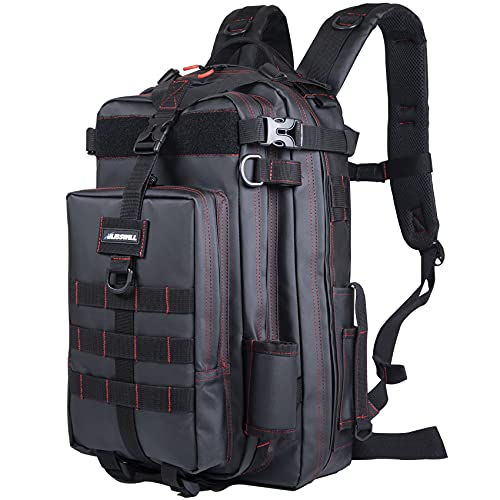
BLISSWILL Fishing Backpack with Rod Holder (Water-Resistant)
An affordable, large-capacity option with a rod holder and water-resistant construction. It hits the value sweet spot for anglers who want the hands-free rod carry and weather protection of a purpose-built pack without a premium price, and the roomy main compartment swallows a full day of gear.
MYSOAS Collapsible Fly Fishing Net (Trail Companion)
Not a pack itself, but the ultralight, collapsible landing net that belongs clipped to one. Its rubber-coated mesh is gentle on trout for catch and release, and the compact fold means it rides on your backpack without snagging brush on the hike in, completing the remote-water kit.
Frequently Asked Questions
How do fishing backpacks carry rods?
Most use vertical rod holders: a base sleeve near the bottom and a strap higher up that secure the rod butt and blank so the rod stands upright against the pack. This keeps your hands free and the tip above the brush while you hike. Look for holders that lock the rod firmly rather than just loosely cinching it.
Do I need a waterproof pack or is water-resistant enough?
For most hike-in fishing, water-resistant is plenty; it handles rain, spray, and dew. Go fully waterproof only if you routinely fish in downpours or wade deep enough to submerge the pack. Either way, keep electronics in an internal dry pocket for insurance.
Will a fishing backpack fit my existing tackle trays?
Most quality packs, including the Piscifun and Rapala Venture, are sized for standard 3600-series utility trays. Check the listed tray compatibility before buying so your current boxes drop right in rather than forcing you to rebuy your whole tackle organization.
How big a pack do I need for a day hike?
For a day trip, a mid-size pack that holds three or four trays, a few tools, water, and a rain layer is ideal. Bigger is tempting but adds weight you carry every step; most hike-in anglers are happiest keeping the load lean and the essentials organized.
Final Thoughts
Reaching remote water is about carrying smart: a pack with secure rod holders and water resistance frees your hands and protects your gear, while good tray organization keeps you fishing instead of digging. The Piscifun covers most anglers, the Rapala Venture wins on organization, and the Wild River earns its keep for low-light trips. Clip on a collapsible net, keep the load lean, and go find the fish no one else will hike to.


Write Your Review
No reviews yet. Be the first to share your experience!