
Key takeaways
- How to match reel size to rod: spinning and baitcasting size charts, line capacity checks and a simple balance test for any rod power.
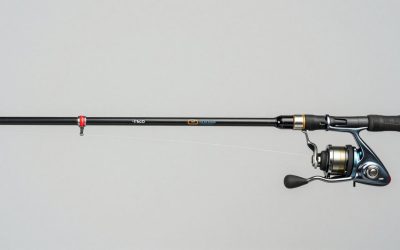
Match a reel to a rod in three steps: read the line rating printed above the rod’s grip, pick the reel size whose spool holds that line comfortably, and then check that the combo balances near the front of the handle. For a typical 6’6″ to 7′ medium-light or medium spinning rod, that usually means a 2500 or 3000 size reel. On a baitcasting rod, a size 100 to 200 reel pairs with most medium-power bass rods. This guide is for anglers building their first combo or replacing a reel and wanting a pairing that casts well and does not tire the wrist.
Quick Answer
- Spinning rod rated for 4 to 10 lb line: 1000 to 2500 reel. Rated for 6 to 12 lb: 2500 to 3000. Rated for 10 to 20 lb: 3000 to 4000.
- Baitcasting rod, medium power rated for 8 to 17 lb: size 100 to 150 reel. Medium-heavy to heavy rated for 14 to 25 lb or more: size 150 to 300 reel.
- Reel type must match the rod: spinning reels go under a spinning rod, baitcasting reels sit on top of a casting rod.
- Pick the smallest reel that holds the line you need and balances the rod.
- Reel numbers are not standardized across brands, so compare spool capacity and weight rather than only the number.
What You Need
You do not need special tools, only the rod’s specifications and a clear idea of how you will fish.
- Rod specs: length, power (ultralight, light, medium-light, medium, medium-heavy, heavy), action (slow, moderate, fast), and the recommended line weight and lure weight, usually printed on the blank just above the cork.
- Reel specs: size, line capacity for a given line weight and diameter, weight in ounces, gear ratio, and maximum drag.
- Line: the line you plan to use. Braid is thinner than monofilament of the same strength, so the same spool holds much more braid.
- A scale or your hands: to check balance once the reel is mounted.
- Knot: use an arbor knot to tie line to the spool, and wrap braid with a layer of mono backing so it does not slip.
Spinning Reel Size Chart
Spinning reel sizes run from 500 or 1000 for ultralight to 8000 and up for heavy saltwater gear. Brand to brand the numbers shift, but within each lineup the pattern holds. Compare the size with the rod’s power and line rating.
| Reel size | Rod power | Typical rod length | Line range | Typical use |
|---|---|---|---|---|
| 1000 | Ultralight | 5’0″ to 6’6″ | 2 to 6 lb | Panfish, small trout |
| 2000 to 2500 | Light to medium-light | 6’0″ to 7’0″ | 4 to 10 lb | Trout, crappie, bass finesse |
| 2500 to 3000 | Medium-light to medium | 6’6″ to 7’3″ | 6 to 14 lb | Bass, walleye, inshore light |
| 3000 to 4000 | Medium to medium-heavy | 7’0″ to 8’0″ | 10 to 20 lb | Larger bass, catfish, redfish, pier |
| 4000 to 6000 | Medium-heavy to heavy | 7’6″ to 10’0″ | 15 to 30 lb or braid to 50 lb | Surf, big inshore fish |
Size 2500 and 3000 reels are very close in weight in many lineups. The 3000 usually adds spool capacity and picks up a bit more line per turn, so on a 7 foot medium rod, either is a reasonable choice.
Baitcasting Reel Size Chart
| Reel size | Rod power | Line | Typical use |
|---|---|---|---|
| 50 to 70 (compact) | Light to medium-light | 6 to 10 lb | Small lures, finesse |
| 100 to 150 | Medium to medium-heavy | 10 to 17 lb | Crankbaits, spinnerbaits, jigs |
| 150 to 200 | Medium-heavy to heavy | 14 to 25 lb, or braid 30 to 65 lb | Jigs, flipping, swimbaits |
| 200 to 300 | Heavy to extra heavy | 20 to 50 lb mono, braid 50 to 80 lb | Big swimbaits, catfish, saltwater |
Baitcasting size numbers vary by brand, so use them as rough guidance. The best test is whether the spool holds the line you want with room to spare.
Step by Step: Match the Reel to the Rod
- Read the rod blank. Note the line rating, lure rating, power and length. A rod labeled 6 to 12 lb line and 1/8 to 3/8 oz lures is a medium-light to medium rod.
- Choose the reel type. Spinning rods have large guides and the reel hangs underneath. Casting rods have smaller guides and a trigger grip with the reel on top.
- Pick the size. Use the charts above. If the rod falls between sizes, choose the smaller reel for a shorter, lighter rod and the larger for a longer rod.
- Check line capacity. Look at the reel’s spool, which lists capacity for a line weight, for example about 140 yards of 10 lb mono. Your fishing needs at least 80 to 100 yards for most freshwater, and more if you target strong runners.
- Fill the spool. Add line until it sits about 1/8 inch below the lip of the spool. An overfilled spool on a spinning reel throws loops; an underfilled spool shortens casts.
- Balance the combo. Mount the reel, then rest the rod on one finger just ahead of the handle. The tip should sit level or slightly down. If the rod tip rises, the reel is too heavy; if the tip dives, the reel is too light.
- Test the feel. Make a few casts and a few retrieves. The combo should be comfortable for a full day, not tiring after an hour.
Match by Fishing Style
| Style | Rod | Reel | Line |
|---|---|---|---|
| Panfish and trout | Ultralight or light, 5’6″ to 6’6″ | 1000 to 2000 spinning | 2 to 6 lb mono |
| Finesse bass | Medium-light, 6’6″ to 7’0″ | 2500 spinning | 6 to 10 lb fluorocarbon or braid with leader |
| General bass | Medium, 6’10” to 7’3″ | 2500 to 3000 spinning or size 100 to 150 baitcaster | 10 to 14 lb |
| Heavy cover and jigs | Medium-heavy to heavy, 7’0″ to 7’11” | Size 150 to 200 baitcaster | 15 to 25 lb fluorocarbon or 40 to 65 lb braid |
| Pier and surf | Medium-heavy, 8’0″ to 10’0″ | 4000 to 6000 spinning | 12 to 20 lb mono |
Common Mistakes
- Going too big. A large reel on a light rod makes the combo front-heavy and slows tip response. Move down a size.
- Going too small. A tiny reel on a heavy rod runs out of line and may flex under a strong fish. Match the spool to the rod’s line rating.
- Ignoring line type. Braid and mono fill spools differently. Always check capacity for the line you plan to use.
- Trusting numbers across brands. A 3000 from one brand can be a different size than another. Compare weight and capacity.
- Overfilling the spool. Leave about 1/8 inch of space so line comes off smoothly.
- Skipping the balance test. A combo that tips forward or back will tire you quickly. Move the reel back in the seat or choose a different size.
Questions
What size spinning reel goes with a medium rod?
A 2500 to 3000 reel is the usual match for a medium rod from 6’6″ to 7’3″. Choose the 2500 for shorter rods and the 3000 for longer rods or when you want more line capacity.
Can I put a bigger reel on a lighter rod?
You can, but it will feel front-heavy and may reduce sensitivity. A reel one size larger than suggested is usually fine if the combo balances well.
Does the gear ratio matter for matching?
Gear ratio affects how much line you pick up per crank, not the rod match. Choose a faster ratio for lures that need quick retrieves and a slower ratio for crankbaits you want to fish steadily.
How much line should I put on the reel?
Fill it to about 1/8 inch below the lip of the spool. If you use braid, add monofilament backing so the braid does not slip on the spool.
Can a spinning reel go on a baitcasting rod?
No. The reel seat and guides are designed for one type. Use a spinning reel on a spinning rod and a baitcasting reel on a casting rod.
Update History
- October 15, 2026 – Initial publication; details checked against current manufacturer guidance and angling references.
- Conditions, regulations and tackle specifications vary by water and region; check local rules before you fish.
Sources
- West Marine, guide to selecting a spinning reel
- Rod and Reel, how to match rod, reel and line
- FishForge, rod and reel compatibility guide
- Master Fishing Mag, spinning reel specifications for beginners
- Team Outdoors, which size reel fits which rod
Write Your Review
No reviews yet. Be the first to share your experience!