
Key takeaways
- Low-speed, about 5.4:1 to 6.3:1: Best for deep-diving crankbaits, large bladed baits, and presentations that require a slow, powerful retrieve. These reels are generally easier to keep at a controlled pace.
- Medium-speed, about 6.4:1 to 7.1:1: A practical choice for crankbaits, spinnerbaits, Texas rigs, and all-around use. If you own one baitcaster, this range is often the safest starting point.
- High-speed, about 7.2:1 to 8.3:1: Useful for jigs, soft plastics, topwater, frogs, and any technique where you must quickly take up slack. The 7.2:1 Sougayilang and KastKing Royale Legend II examples fit this versatile fast-retrieve category.
- Extra-high-speed, about 8.4:1 and above: Designed for maximum line recovery. A listed 8.0:1 KastKing Royale Legend Pro is fast without reaching the most extreme ratios, making it suitable for anglers who prioritize quick pickup.
Choosing a baitcaster gear ratio is less about finding the biggest number and more about matching retrieve speed to the way you fish. A common mistake is assuming an 8.0:1 reel is automatically better than a 6.3:1 model. Another is comparing ratios without considering spool size, line diameter, lure weight, or whether the reel is right- or left-hand retrieve.
Buyers also regularly confuse gear ratio with actual line pickup. A 7.2:1 reel does not always retrieve exactly 7.2 times more line than a 6.3:1 reel because spool diameter affects how much line each revolution collects. Fast ratios can be excellent for moving a lure quickly, but they may feel harder to crank under load. Slow ratios can provide more control and leverage, but they take longer to bring a lure back to the boat.
Our top picks
 KastKing Royale Legend II Baitcasting Reels
- Hand Orientation: Right Hand
- Fishing Technique: Baitcasting
- Other Special Features of the Product: Adjustable Braking System
Cross-Fire 8-magnet brake helps cut down on backlash
Ceramic line guide and CNC spool add casting strength
Choice of 5.4:1 or 7.2:1 ratio suits different techniques
Right-hand only build, no left-hand option listed
Six bearings total is modest for a performance reel
| Product | Key specs | |
|---|---|---|
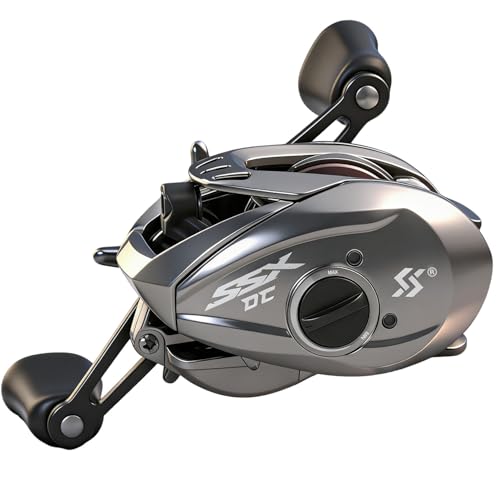 Sougayilang Baitcasting Reel with Digital Anti-Backlash Control Sougayilang Baitcasting Reel with Digital Anti-Backlash Control | Check price | |
| KastKing Royale Legend II Baitcasting Reels | Hand Orientation: Right Hand Fishing Technique: Baitcasting Other Special Features of the Product: Adjustable Braking System | Check price |
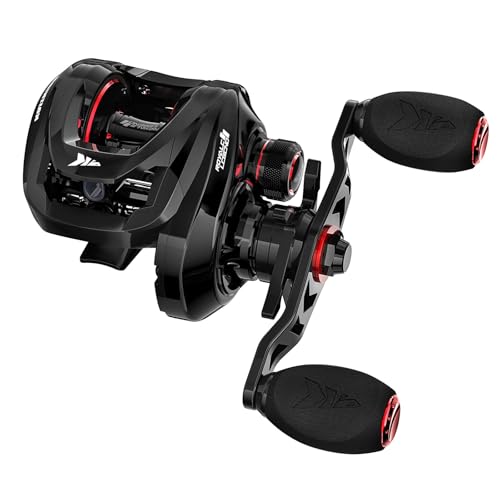 KastKing Royale Legend II Baitcasting Reels KastKing Royale Legend II Baitcasting Reels | Check price | |
 KastKing Royale Legend Pro Baitcasting Fish Reels KastKing Royale Legend Pro Baitcasting Fish Reels | Hand Orientation: Right Hand Material: Carbon Fiber Fishing Technique: Baitcasting | Check price |
As an Amazon Associate we earn from qualifying purchases at no extra cost to you.
Use the guide below to choose a baitcaster that fits your techniques, hand, budget, and maintenance expectations in 2026.
Decide These 3 Things First
- What are you fishing? Choose roughly 6.3:1 to 7.0:1 for crankbaits, spinnerbaits, and techniques where steady power matters; 7.1:1 to 7.5:1 for general-purpose bass fishing; and 7.6:1 to 8.3:1 or higher for pitching, flipping, frogs, and quickly picking up slack line.
- How much line must you recover? If you fish around docks, grass, or heavy cover, a fast reel helps remove slack quickly. If you make long crankbait retrieves, a moderate ratio can reduce fatigue and make it easier to maintain a consistent pace.
- Which hand and size fit you? Decide between right- and left-hand retrieve before comparing features. A reel that looks excellent on paper is a poor buy if you must awkwardly switch hands after every cast.
Gear Ratio and Retrieve Speed
The gear ratio describes how many times the spool turns for one complete turn of the handle. A 6.3:1 reel turns the spool 6.3 times per handle revolution, while a 7.2:1 reel turns it 7.2 times. That does not equal inches per turn, or IPT, because IPT changes as line leaves the spool.
- Low-speed, about 5.4:1 to 6.3:1: Best for deep-diving crankbaits, large bladed baits, and presentations that require a slow, powerful retrieve. These reels are generally easier to keep at a controlled pace.
- Medium-speed, about 6.4:1 to 7.1:1: A practical choice for crankbaits, spinnerbaits, Texas rigs, and all-around use. If you own one baitcaster, this range is often the safest starting point.
- High-speed, about 7.2:1 to 8.3:1: Useful for jigs, soft plastics, topwater, frogs, and any technique where you must quickly take up slack. The 7.2:1 Sougayilang and KastKing Royale Legend II examples fit this versatile fast-retrieve category.
- Extra-high-speed, about 8.4:1 and above: Designed for maximum line recovery. A listed 8.0:1 KastKing Royale Legend Pro is fast without reaching the most extreme ratios, making it suitable for anglers who prioritize quick pickup.
For a general-purpose purchase, 7.0:1 to 7.3:1 is a sensible compromise. Pair a slower reel with resistance-heavy lures and a faster reel with slack-line techniques rather than choosing solely by the largest printed number.
Reel Size
Baitcaster sizes are not standardized across brands, so a “100,” “150,” or “200” designation is only a rough guide. In general, a compact 70- to 100-size reel weighs about 5.5 to 7 ounces and suits finesse or light-to-medium bass work. A 100- to 150-size reel commonly weighs about 6 to 8 ounces and handles most everyday bass applications. A 200-size reel may weigh approximately 7 to 10 ounces and offers more line capacity for heavier lures, larger fish, or thick line.
Check the published dimensions before buying. A comfortable low-profile baitcaster is often around 2.5 to 3 inches wide, 2.5 to 3 inches tall, and 3 to 4 inches long, though measurements vary by frame and handle. The spool should hold the line size you actually use. A compact reel filled with 12-pound monofilament may not provide enough capacity for 50- to 65-pound braided line.
Do not oversize the reel simply to obtain a higher drag rating. Match the reel to the rod, lure weight, and line diameter.
Materials and Construction
Look for an aluminum frame or an aluminum frame with side plates that resist flex under load. Graphite or carbon-composite side plates can reduce weight, but the frame is the more important structural component. A metal handle, supported by a solid gear shaft, generally feels more secure with heavy lures than a thin, flexible handle.
For everyday freshwater use, a reel with approximately 4 to 10 bearings may operate smoothly, but bearing count alone does not establish quality. Sealed or shielded bearings can help limit contamination, while stainless-steel main and pinion gears are common choices for corrosion resistance. Saltwater anglers should specifically seek corrosion-resistant components and rinse the reel with fresh water after use; no finish eliminates the need for maintenance.
Pay attention to the spool material and braking system. A lighter spool can help with lighter lures, while a deeper spool provides more line capacity. Magnetic, centrifugal, and digital braking systems can all control spool overrun when correctly adjusted. The Sougayilang example uses a digital anti-backlash control system, but electronic assistance does not replace thumb control or correct tension settings.
Comfort and Performance
Weight matters during repeated casting. A reel around 6 to 7.5 ounces is usually easier to pair with a bass rod for all-day use than a 9-ounce model, but balance matters as much as the scale number. Mount the reel on your rod if possible and check whether the outfit feels tip-heavy.
Choose a handle length based on lure resistance. Handles around 80 to 90 millimeters are common for general use. A 95- to handle can provide more leverage for swimbaits and heavy cover, though it may feel less compact. Double paddle knobs are comfortable for many anglers; larger EVA or rubber knobs can improve grip in wet conditions.
Drag ratings should be treated as a maximum specification, not a target setting. A reel rated for 15 to 20 pounds of drag is ample for many bass applications, but fishing line strength, rod power, knots, and cover determine how much pressure is practical. The example Sougayilang listing specifies an 18.5-pound maximum drag. Set drag smoothly and avoid locking it down unless the technique and tackle justify it.
Price Tiers
Budget: $25 to $50. This range can deliver a usable starter reel, especially for occasional freshwater fishing. Expect basic materials, fewer refinements, and a greater need to adjust spool tension and braking carefully. The listed Sougayilang model is priced at $29.98, while the right- and left-hand KastKing Royale Legend II examples are each listed at $41.39.
Midrange: $50 to $100. These reels often offer better ergonomics, more consistent adjustment, improved machining, and a broader selection of retrieve speeds. They are a reasonable choice for frequent anglers who want one dependable reel without paying for specialized construction.
Premium: $100 and above. Premium models may provide lighter frames, refined gears, stronger corrosion protection, smoother controls, and better quality consistency. They are most worthwhile when you fish regularly, need a specialized ratio, or will use the reel in demanding conditions. For comparison, the listed KastKing Royale Legend Pro 8.0:1 is $84.98, placing it at the upper end of the budget-to-midrange market rather than true luxury pricing.
Warranty and Support
Read the warranty length, exclusions, and return window before judging a bargain. A one-year limited warranty is common, but coverage may exclude normal wear, water damage, improper lubrication, or damage from disassembly. Confirm whether the manufacturer or retailer handles claims and whether replacement parts are available.
For a reel under $50, shipping a repair may cost too much to justify. For a $100-plus reel, accessible parts and service can make the higher purchase price worthwhile. Save the receipt, product packaging, and serial number if one is provided.
Delivery and Assembly
A baitcaster does not require furniture-style assembly, but it does require setup. Confirm that the package includes the reel, handle, spool tension components, and any included tools or instructions. Delivery should protect the reel from crushed packaging and moisture. Check the spool, handle, drag star, and thumb bar immediately after arrival.
Before the first cast, install the reel on a compatible rod, fill the spool to about 1/8 inch below the rim, set spool tension so the lure falls steadily, and begin with a conservative brake setting. Test with a lure within the reel’s recommended weight range. A fast 7.2:1 reel is not automatically easy to cast if the spool is overfilled or the brake is set too lightly.
Spec Checklist
| Spec | Budget | Mid | Premium |
|---|---|---|---|
| Typical price | $25-$50 | $50-$100 | $100-$250+ |
| Useful ratio range | 6.3:1-7.2:1 | 6.3:1-8.0:1 | 5.4:1-9.0:1 |
| Approximate weight | 6.5-9 ounces | 6-8 ounces | 5.5-7.5 ounces |
| Frame preference | Composite or aluminum | Aluminum or reinforced composite | Lightweight aluminum or advanced composite |
| Brake system | Magnetic or basic centrifugal | Adjustable magnetic or centrifugal | Fine-adjustment or electronic-assisted options |
| Typical drag rating | 12-18 pounds | 15-20 pounds | 18-25 pounds |
Red Flags
- A listing gives a gear ratio but omits line-retrieve rate, spool capacity, and weight.
- The reel claims an unusually high bearing count without explaining bearing type or sealing.
- There is no clear right- or left-hand retrieve option.
- The drag rating is prominent, but the frame, gear material, and warranty are not identified.
- The spool is difficult to remove, the brake dial has no useful adjustment range, or the handle has noticeable play out of the box.
- The product description promises “anti-backlash” casting without explaining whether the system is magnetic, centrifugal, or electronic.
FAQ
What is the best baitcaster gear ratio for beginners?
A 6.8:1 to 7.2:1 reel is usually the most versatile starting point. It is fast enough for soft plastics and topwater while remaining manageable for spinnerbaits and many crankbaits.
Is a 7.2:1 baitcaster too fast?
No. A 7.2:1 ratio is a practical all-purpose speed for many bass anglers. It may feel less powerful with large deep-diving crankbaits, but it excels at recovering slack line and repositioning a lure quickly.
Is a higher gear ratio better for casting farther?
Not necessarily. Casting distance depends more on spool design, brake adjustment, lure weight, line, rod action, and technique. Gear ratio primarily changes retrieve speed and handle leverage after the cast.
Should I buy a right- or left-hand baitcaster?
Choose the side that lets you comfortably cast and retrieve without awkward hand switching. Right-hand models suit anglers who prefer to crank with the right hand; left-hand models allow right-handed casting while keeping the rod in the dominant hand during the retrieve.








Write Your Review
No reviews yet. Be the first to share your experience!