
Key takeaways
- Learn how to choose an aluminum fishing boat trailer for durability: frame type, galvanic corrosion, axles, capacity math and a used-trailer checklist.
A durable aluminum boat trailer comes down to five things: an open or well-drained frame, isolated dissimilar metals, a sealed suspension, a capacity rating well above your loaded boat weight, and sealed lights and bearings. Aluminum will not rust like steel, but it can still crack at welds and corrode where it touches stainless or galvanized parts. This guide shows what to check on a showroom floor or a used trailer, with sizes, a capacity example and a maintenance routine.
Quick Answer
- Add up boat, motor, fuel (about 6.1 pounds per gallon of gasoline), batteries and gear, then add a 10 percent allowance for gear before comparing the total to the trailer’s rated capacity.
- Prefer a frame you can see into and wash out: open C-channel, or a box tube with factory drain holes at the low points.
- Look for plastic washers, nylon pads or sealant between aluminum and any steel or stainless part, and use 300-series stainless or aluminum fasteners.
- In saltwater, torsion axles are favored by most sources because the suspension is sealed, but wheel bearings still need grease on any axle type.
- Rinse the whole trailer with fresh water after every saltwater launch.
What You Need
Gather these specs before you compare trailers. They decide how long the trailer will last.
- Rated capacity: the gross vehicle weight rating on the certification label, usually on the tongue or frame near the coupler.
- Frame type: C-channel, box tube or I-beam, and whether it is welded or bolted.
- Axle and suspension: torsion or leaf spring, plus the axle rating on the data plate.
- Hardware: fastener material, plastic isolators, and bunk bracket material.
- Electrical: sealed LED lights, waterproof connectors and a clear ground path.
- Hubs: bearing protectors or an oil-bath system, and tire load rating.
Frame and Weld Choices
| Frame feature | Strength | Watch for |
|---|---|---|
| Open C-channel | Easy to inspect, wash and repair; wiring is easy to reach | Needs good cross bracing for torsion loads |
| Box tube | Forum engineers cite higher bending stiffness than channel | Trapped water or salt inside; look for drain holes |
| I-beam | Owners report long life on aluminum I-beam trailers | Fatigue cracking if flexed repeatedly |
| Welded joints | Rigid and common | Softened metal near the weld |
| Bolted joints | Allow some flex and are easy to replace | Fastener holes are stress points |
Most forum evidence for tube and channel frames comes from steel trailers, so treat it as a guide, not a verdict for aluminum. The weld issue is better documented. Fresh 6061-T6 aluminum is about 45 ksi in tensile strength, but the heat-affected zone beside a weld typically tests around 24 to 27 ksi. One fatigue design guide gives an as-welded joint only about 40 to 60 percent of the fatigue capacity of the parent metal. That does not make welded frames bad; it means good makers add gussets and reinforcement near the joints, and you should inspect those areas for cracks.
Where you launch matters too. Owners of closed tube frames say salt is the worst case because there is no good way to wash the inside, while in fresh water they report far fewer problems. If you launch in brackish or salt water, choose open channel or confirm the tube has drain holes at every low point, and plan to stop on the ramp so the frame can drain.
Keep Corrosion Away From Aluminum
Galvanic corrosion occurs when two different metals touch in a conductive liquid such as saltwater. On an aluminum trailer, the aluminum is the metal that gives up material when it contacts stainless or galvanized steel. Work through this checklist on any trailer you plan to buy.
- Find every point where steel meets aluminum, such as spring hangers, axle mounts, winch posts and bunk brackets.
- Look for plastic or nylon washers, pads or sealant between those parts.
- Check that the fasteners are aluminum or 300-series stainless, matched to the application.
- Ask whether threads are coated with an anti-seize and anti-corrosion paste such as Tef-Gel; it also reduces galling between stainless and aluminum, but it should not touch plastic parts.
- Rinse the trailer thoroughly with fresh water after saltwater use, and flush tight crevices where salt collects.
- Inspect isolating washers each season and replace any that are cracked or missing.
A fresh-water rinse helps, but it does not replace isolation between metals. If a showroom trailer has bare steel bolts threaded straight into aluminum, that is a red flag.
Axles, Capacity and Weight
| Feature | Torsion axle | Leaf spring |
|---|---|---|
| Suspension design | Sealed rubber inside the axle tube | Exposed steel leaves and hangers |
| Maintenance | No suspension greasing | Grease shackles and check U-bolts once or twice a year |
| Saltwater life | Often favored; fewer exposed parts | Rust can develop quickly when dunked |
| Repair | More costly to replace | Parts are cheap and widely available |
| Uneven ground | Wheels can lift on rough ground | Distributes weight on dual axles |
Torsion axles typically cost about 20 to 30 percent more than a comparable leaf spring setup, and the rubber cords can last well over a decade. Either axle type still needs wheel bearings serviced.
A Worked Capacity Example
Use wet weight, not the brochure weight. For a small fishing boat, add the pieces below, then add the gear allowance.
| Item | Weight |
|---|---|
| Boat hull | 900 pounds |
| Outboard motor | 200 pounds |
| Fuel, 20 gallons at 6.1 pounds per gallon | 122 pounds |
| Batteries and electronics | 60 pounds |
| Subtotal | 1,282 pounds |
| Gear allowance of 10 percent | 128 pounds |
| Capacity needed | about 1,410 pounds |
Compare 1,410 pounds to the trailer’s payload, which is its gross rating minus its own weight. As a hypothetical, a trailer with a 2,000-pound rating and a 400-pound empty weight has a payload of 1,600 pounds, which clears the example. Never load past the lower of the trailer and axle ratings on the data plate.
Lights, Wiring and Bearings
Choose sealed, submersible LED lights with waterproof connectors, since the lights may be sealed while the wire connections often are not. Confirm whether the trailer uses a dedicated white ground wire to each light or grounds to the frame. Route harnesses where they cannot chafe on sharp edges. For bearings, a spring-loaded protector keeps pressure on the grease and helps resist water pulled past the seal; check that it fits your hub size. Let hot hubs cool before backing into the water, since a sudden dunk can pull water through the seals.
Used Trailer Inspection Checklist
- Read the certification label and confirm both the gross rating and the axle rating.
- Look along every weld and gusset for hairline cracks, especially near the axle mounts and tongue.
- Check bolt heads and brackets for white, chalky buildup, which points to corrosion where metals meet.
- Spin each wheel and listen for grinding, then see whether the bearing protector holds grease pressure.
- Test every light and check that connectors are sealed and the ground is clean.
- Press the bunk brackets by hand to see whether they flex, and look at tire sidewalls for cracks.
If two or more items fail, budget for repairs or move on to another trailer.
Gear That Helps
vidaXL Boat Trailer – A Hand-Pulled Launching Trolley, Not a Road Trailer
As an Amazon Associate we earn from qualifying purchases at no extra cost to you.
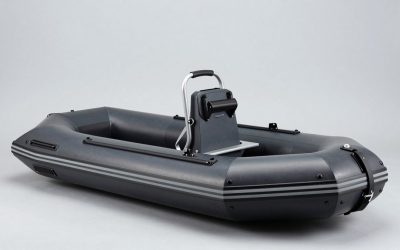
This listing is a small hand-pulled trailer, more like a launching trolley than a highway trailer. Listings describe it as rustproof, three-way adjustable and about 320 centimeters long, for boats up to roughly 4.6 meters and 160 kilograms (about 15 feet and 350 pounds). It weighs about 15.7 kilograms and can be taken apart to fit in a car trunk. It suits a small jon boat or inflatable you move by hand at a ramp or shore; it will not replace a licensed road trailer. Materials vary by marketplace, so confirm the metal and capacity on the listing.
Common Mistakes
- Buying a trailer rated close to the boat’s dry weight instead of its loaded wet weight.
- Trusting the word “aluminum” without checking where steel and stainless touch the frame.
- Skipping a fresh-water rinse after saltwater launches.
- Forgetting that torsion axles still have wheel bearings that need grease.
- Using ordinary automotive grease on bearings instead of a marine grease built to resist washout.
- Backing hot hubs straight into cold water.
Questions
Do aluminum boat trailers need maintenance?
Yes. Rinse after saltwater use, grease the wheel bearings, check lug nuts and inspect isolating washers and weld areas for cracks. Aluminum resists rust, but hardware and bearings still wear.
Is a welded or bolted aluminum frame better?
Neither is automatically better. Welds soften nearby metal and can fatigue if the frame flexes, while bolted joints put stress at fastener holes. Look at the build quality, gussets and inspection access, not just the joining method.
Which is better for saltwater, torsion or leaf spring?
Most sources favor torsion axles because the suspension is sealed and has no metal-on-metal rubbing. Leaf springs cost less and are easy to repair, so they can still make sense if you rinse well.
How much extra capacity should I add?
Sources suggest adding about a 10 percent allowance for gear to the boat, motor and fluids, then picking a trailer rated above that total.
Can I use a launching trolley as a trailer?
Only for short hand-pulled moves of small boats. Highway towing requires a real trailer with the correct rating, lights and brakes where required.
Update History
- October 15, 2026 – Updated with specification checks and a revised product comparison.
- Check the product page for current specifications and availability before buying.
Sources
- Venture Trailers guidance on trailer capacity and weight calculation
- Tef-Gel, Jamestown Distributors and TotalBoat guidance on galvanic corrosion
- Boating Magazine guidance on bearing protectors and trailer lighting
- Aluminum fatigue and heat-affected zone references for 6061-T6
- Venture Trailers and etrailer discussions of torsion and leaf spring axles
- vidaXL product listings and retailer descriptions





Write Your Review
No reviews yet. Be the first to share your experience!