
Our Top Picks
The best ultralight spinning reel in this group is the Lew’s Laser Lite size 75, because it is the lightest of the five and is built around the 2 to 6 pound line that ultralight trout and panfish fishing calls for. If you want a more flexible reel with several size choices, the Daiwa Crossfire LT is the better all-rounder. “Ultralight” here means a small spinning reel, usually a size 500 to 2000, matched to a light rod and 2 to 6 pound line, and the listings below are budget-friendly reels in that range.
Quick List
- Lew’s Laser Lite size 75 – best for a true ultralight feel on trout and panfish rods
- Daiwa Crossfire LT (first listing) – best for a flexible light-power reel with a size to fit almost any setup
- QINGLER Summer and Centron 1000 – best for ice fishing and the smallest panfish setups
- Daiwa Crossfire LT (second listing) – best for stepping up to a larger size when you want more line capacity
- QINGLER Summer and Centron 3000 – best for anglers who want a light reel with more capacity for bass and larger panfish
Which One Is Right for You?
| If you… | Choose |
|---|---|
| fish small creeks for trout or pond bluegill on 2 to 4 pound line | Lew’s Laser Lite size 75 |
| want a mainstream reel and plan to pick the exact size yourself | Daiwa Crossfire LT (first listing) |
| fish through the ice or want the smallest, lightest-feeling budget reel | QINGLER size 1000 |
| want a slightly bigger Crossfire for 6 to 10 pound line on lakes | Daiwa Crossfire LT (second listing) |
| need more line capacity for bass, crappie or light trolling on one reel | QINGLER size 3000 |
The simplest rule is to match reel size to line. A size 1000 reel is the usual ultralight choice for 2 to 6 pound line, a 2000 handles 4 to 8 pound line, and a 2500 or 3000 is a “light” reel rather than a true ultralight. Weight matters just as much as size, because a heavy reel makes a light rod feel tip-light and less sensitive. Confirm the exact size and version on each listing before you buy.
All 5 Picks in Detail
1. Lew’s Laser Lite Size 75 – Best for a True Ultralight Feel
As an Amazon Associate we earn from qualifying purchases at no extra cost to you.
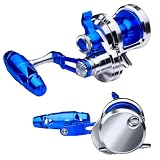
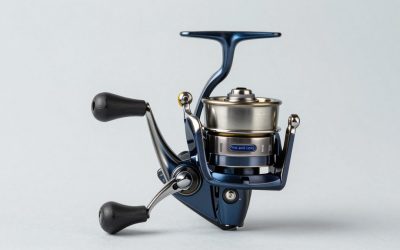
The Laser Lite is a graphite-bodied reel built for small baits and light line, and the size 75 is the one that fits an ultralight trout or panfish rod. The listing describes a graphite frame and sideplate, 6+1 bearings, Speed Lube treatment and a multi-disc drag, with a reversible handle. It is the lightest reel here on paper, though the published weight varies between versions of the size 75: the listing shows about 6.56 ounces, while other retailers list Laser Lite size 75 reels at 5.0 and 6.4 ounces. That is why the version number matters, so confirm the weight and gear ratio on the listing.
- Frame and sideplate: graphite
- Bearings: 6+1 on the listing
- Drag: multi-disc, with a published maximum around 6 to 6.6 pounds on common versions
- Gear ratio: 5.0:1 on current versions, about 22 inches of line per turn
- Capacity on common versions: about 120 yards of 6 pound mono, and 150 yards of 8 pound braid on the Gen 2
- Handle: reversible for left or right-hand retrieve
Pros:
- Lightest of the group, so it balances well on short ultralight rods
- Small spool matches the 2 to 6 pound line used for trout and bluegill
- Reversible handle suits any angler
Cons:
- A graphite body keeps weight down, but this is a light-duty reel for small fish rather than anything big
- Several versions exist, so published specs differ between retailers
- Limited line capacity means you should not plan on long runs from heavy fish
Compared with the Daiwa Crossfire LT 1000, the Laser Lite is lighter on paper but offers fewer size choices.
2. Daiwa Crossfire LT (First Listing) – Best for a Flexible Light-Power Reel

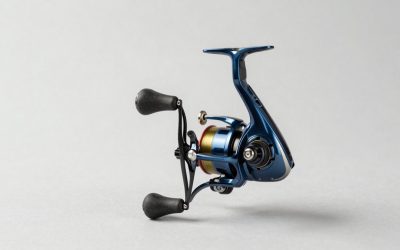
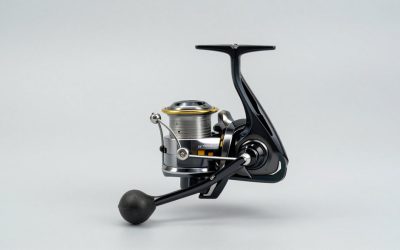
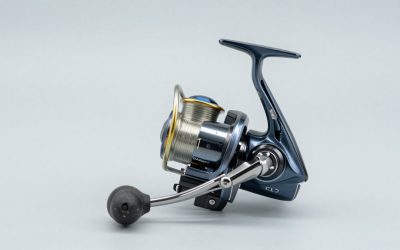
The Crossfire LT is Daiwa’s budget spinning reel built around its “Light but Tough” idea. The listing highlights an Airdrive design for smooth rotation, Tough Digigear, a light LC-ABS spool and the ATD Type-L drag system. Retailers list sizes 1000, 2000, 2500, 3000-C, 4000-C and 5000-C, and the listing offers several of those in its size selector, so the exact size on this page depends on what you pick. For ultralight use, the 1000 and 2000 are the sizes to look at. Retailer spec tables list 3 ball bearings plus 1 roller bearing.
- Size 1000: 5.2:1 gear ratio, 7.8 ounces, 11 pounds maximum drag
- Size 1000 capacity: 2 pound mono for 250 yards or 4 pound mono for 110 yards; 6 pound braid for 160 yards
- Size 2000: 5.2:1 gear ratio, 7.9 ounces, 11 pounds maximum drag
- Size 2000 capacity: 4 pound mono for 160 yards or 6 pound mono for 110 yards; 6 pound braid for 220 yards
- Bearings: 3 ball bearings plus 1 roller bearing, according to retailer tables
- Spool: LC-ABS; drag: ATD Type-L
Pros:
- Several sizes, so one reel family can cover ultralight and light-power rods
- Published line-capacity tables for mono and braid make setup easy
- Lightweight design with a drag built for finesse
Cons:
- At about 7.8 to 7.9 ounces, the 1000 and 2000 are heavier than purpose-built ultralight reels
- Maximum drag figures differ across retailers, and some older Crossfire LT listings show different numbers
- The exact size on the listing must be confirmed before buying
Next to Lew’s Laser Lite, the Crossfire LT is heavier but easier to size to your rod.
3. QINGLER Summer and Centron Size 1000 – Best for Ice Fishing and the Smallest Panfish Setups

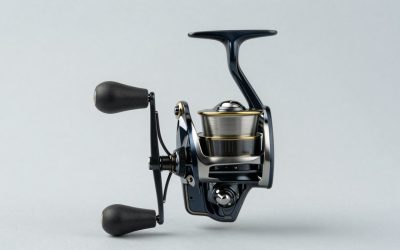
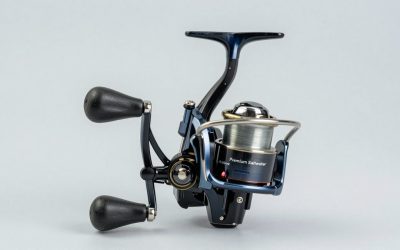
This QINGLER reel is sold for both ice and summer fishing, and the size 1000 version is the smallest reel in this list. The listing highlights 12+1 ball bearings, an anti-reverse switch, a non-slip handle and a quiet design. A retailer listing gives the weight as about 5.25 ounces, a 5.2:1 gear ratio and a maximum drag of up to 11 pounds. That drag figure is far above anything you would actually use on 2 to 4 pound line, so look at it as headroom rather than a working number. The 12 bearing claim is a listing figure; confirm the bearing count on the page.
- Size: 1000
- Weight: about 5.25 ounces on retailer listings
- Gear ratio: 5.2:1
- Bearings: listed as 12+1
- Maximum drag: up to 11 pounds listed
- Handle: foldable, non-slip, and described as swappable between left and right
Pros:
- Light enough to balance on short ultralight and ice rods
- Foldable handle is useful when the reel is stored in a pocket or small tackle bag
- Smallest size in the group, ideal for 2 to 4 pound line
Cons:
- Listing specifications such as bearing count and line capacity are manufacturer claims and vary between sellers
- A lesser-known brand, so confirm warranty and parts support with the seller
- Line capacity units on some listings are unclear, so confirm the numbers on your listing
Compared with the Lew’s Laser Lite, this reel is similar in weight but less established.
4. Daiwa Crossfire LT (Second Listing) – Best for Stepping Up to a Larger Size

This second listing is the same Crossfire LT family as the first, so the same features apply: Airdrive design, Tough Digigear, an LC-ABS spool and the ATD Type-L drag. The difference is the size you select. Because the page title does not name the size, pick the size from the selector and check it against the chart below. If you plan to fish 6 to 10 pound line on lakes for crappie, bass or walleye, the 2500 or 3000-C is a better fit than the 1000.
- Size 2500: 5.3:1 gear ratio, 8.8 ounces, 11 pounds maximum drag (some older listings show 22 pounds)
- Size 2500 capacity: 6 pound mono for 160 yards or 8 pound mono for 110 yards; 8 pound braid for 200 yards
- Size 3000-C: 5.3:1 gear ratio, 9.2 ounces, 22 pounds maximum drag
- Size 3000-C capacity: 10 pound mono for 130 yards or 12 pound mono for 110 yards; 8 pound braid for 220 yards
- Larger 4000-C and 5000-C sizes are made but are not ultralight
- Right- or left-hand retrieve
Pros:
- More line capacity for stronger or longer-running fish
- Consistent feature set across the whole family
- A natural step up when 1000 and 2000 sizes feel too small
Cons:
- At 8.8 to 9.2 ounces, the larger sizes are no longer ultralight
- Drag figures conflict between retailers for the 2500, so confirm before relying on it
- Choosing the right size needs the selector, not the title
Compared with the QINGLER size 3000, the Daiwa is the more established name and the QINGLER is lighter on paper.
5. QINGLER Summer and Centron Size 3000 – Best for More Capacity on a Light Reel

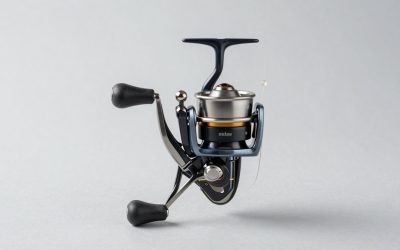
The size 3000 QINGLER is the biggest reel in this group, and it sits at the edge of what counts as “light.” A retailer listing gives the weight as about 7.8 ounces with a hollow CNC-machined metal spool, a 5.1:1 gear ratio and a maximum drag of about 12 to 13 pounds depending on the listing. It uses the same 12+1 bearing claim, anti-reverse switch and non-slip handle as the size 1000. The extra spool size gives you more line capacity, which helps if you want one reel for crappie, bass and larger panfish.
- Size: 3000
- Weight: about 7.8 ounces on retailer listings
- Gear ratio: 5.1:1
- Maximum drag: about 12 to 13 pounds, depending on the listing
- Spool: hollow, CNC-machined metal on retailer descriptions
- Bearings: listed as 12+1
Pros:
- Larger spool holds more line than the size 1000
- Weighs about the same as the Daiwa Crossfire LT 1000 and 2000 on paper
- Useful for light-line bass and crappie fishing
Cons:
- Too large for a true ultralight rod
- Specification numbers differ between listings
- Same lesser-known brand concerns as the size 1000
Compared with the QINGLER size 1000, this is the choice if capacity matters more than weight. Keep in mind that at roughly 7.8 ounces it is no longer a true ultralight, so pair it with a light-power rod rather than an ultralight rod, and confirm the size, drag and weight on the listing because published numbers differ between sellers.
Specs Compared
| Reel | Size | Weight (listed) | Gear ratio | Max drag (listed) | Best use |
|---|---|---|---|---|---|
| Lew’s Laser Lite | 75 | about 5.0 to 6.56 oz, depending on version | 5.0:1 on current versions | about 6 to 6.6 lb | Trout, bluegill, small creeks |
| Daiwa Crossfire LT (first listing) | confirm on listing | 7.8 oz (1000), 7.9 oz (2000) | 5.2:1 | 11 lb | Flexible light-power reel |
| QINGLER Summer and Centron | 1000 | about 5.25 oz | 5.2:1 | up to 11 lb | Ice and small panfish |
| Daiwa Crossfire LT (second listing) | confirm on listing | 8.8 oz (2500), 9.2 oz (3000-C) | 5.3:1 | 11 lb (2500), 22 lb (3000-C) | Larger light reel |
| QINGLER Summer and Centron | 3000 | about 7.8 oz | 5.1:1 | about 12 to 13 lb | More capacity, light bass |
How We Chose These
This comparison is based on research, not on-the-water use. We started with the five reels in the product list and looked up each one’s feature list and specification table from retailer pages and buying guides. We compared reel size, listed weight, gear ratio, drag, bearings and line capacity, and we noted where sources disagreed, such as the Lew’s Laser Lite weight and the Daiwa Crossfire LT drag figures. We then checked those numbers against general ultralight guidance from established fishing sources, including recommended line sizes and reel weights. When a spec was unclear, we have said “confirm on listing” rather than guessing.
What to Look For
Reel size and line pairing
Spinning reel sizes are not standard across brands, so use the line capacity and weight rather than the number alone. As a rough guide, a size 1000 is the usual choice for trout, panfish, crappie and perch on 2 to 6 pound mono or fluorocarbon, or 4 to 8 pound braid. A size 2000 is a common all-round trout size and holds about 150 yards of 6 pound mono, and a 2500 or 3000 suits bigger fish and heavier line. The chart below turns that into a quick reference using the published Daiwa Crossfire LT numbers.
| Size | Mono capacity | Braid capacity | Listed weight | Best for |
|---|---|---|---|---|
| 1000 | 2 lb/250 yd, 4 lb/110 yd | 6 lb/160 yd, 8 lb/130 yd | 7.8 oz | Creek trout, bluegill |
| 2000 | 4 lb/160 yd, 6 lb/110 yd | 6 lb/220 yd, 8 lb/150 yd | 7.9 oz | All-round trout, crappie |
| 2500 | 6 lb/160 yd, 8 lb/110 yd | 8 lb/200 yd, 10 lb/170 yd | 8.8 oz | Lake trout, bass, walleye |
| 3000-C | 10 lb/130 yd, 12 lb/110 yd | 8 lb/220 yd, 10 lb/185 yd | 9.2 oz | Bigger fish, light inshore use |
Weight and rod balance
A common definition of ultralight is a reel under 10 ounces, and many guides say to aim for under 8 ounces. The best ultralight reels fall in the 6 to 7.5 ounce range, and a heavy reel on a light rod makes the tip feel dull and the rod feel less sensitive. Among these five, the Lew’s Laser Lite and the QINGLER size 1000 sit at the lighter end, while the larger Daiwa sizes run closer to 9 ounces. If your rod is very light, a heavier reel will hurt the balance more than it helps with capacity.
Drag: smoothness over maximum number
Maximum drag ratings on these reels run from about 6 to 26 pounds, but they have little to do with real ultralight fishing. A general rule is to set the drag at 20 to 30 percent of the line’s breaking strength. On 4 pound line that works out to roughly 0.8 to 1.2 pounds, and on 6 pound line about 1.2 to 1.8 pounds, which is simple arithmetic from the rule rather than a figure from the sources. West Marine suggests using a handheld spring scale to set it. Smoothness at low settings matters more than the maximum, and the best drags start without a jerk.
Line choice and spooling
Ultralight rods are generally rated for 2 to 6 pound line and lures from about 1/32 to 1/8 ounce. Most guides recommend 2 to 4 pound fluorocarbon or mono. If you use braid, pair it with a fluorocarbon leader of a rod length or so. One setup suggested by a guide is 8 pound braid with a 4 pound fluorocarbon leader. Do not overfill the spool: stop about 1/8 inch below the rim, because overfilling causes wind knots and tangles. This applies to all five reels in the list.
Freshwater, saltwater and ice
These reels are marketed for freshwater, with the Crossfire LT described by retailers as suitable for freshwater and light saltwater use. The QINGLER reels are sold for ice and summer fishing. If you plan to fish saltwater, rinse the reel with fresh water after every trip, and keep the drag loose when you store it. For a regular saltwater habit, a reel with sealed or more corrosion-resistant construction is a safer long-term bet than any budget reel.
Questions
What size ultralight spinning reel is best for trout?
A size 1000 suits small streams and 2 to 4 pound line, and a size 2000 is the all-around trout size, holding about 150 yards of 6 pound mono. Choose the 1000 for tight creeks and the 2000 for bigger water or wind.
Can I use these budget ultralight reels in saltwater?
Occasionally, yes, but they are not built for it. The Crossfire LT is described by retailers as suitable for freshwater and light saltwater, while the QINGLER reels are sold for ice and summer fishing. Rinse any reel with fresh water after saltwater use and expect a shorter life.
How often should I service an ultralight reel?
There is no universal schedule. Rinse after dirty or wet trips, wipe the line roller and bail, and add a drop of reel oil to the handle and bail pivots when the reel feels dry or rough. If the drag stutters or grit is audible, it is time for a deeper clean.
Do I need braid on an ultralight reel?
No. Many ultralight anglers prefer 2 to 4 pound mono or fluorocarbon. Braid helps with sensitivity and distance, but it needs a fluorocarbon leader and a little backing so it does not slip on the spool.
Is a higher maximum drag number better?
Not for ultralight fishing. You will rarely set drag above 1 or 2 pounds on 2 to 6 pound line, so a smooth, consistent drag matters more than a big maximum number.
Why do the Daiwa Crossfire LT specs differ by retailer?
There are older and newer versions of the Crossfire LT. Some listings still show the earlier 2020 model, which had a different bearing count and drag figures. Check the size and model number on your listing against Daiwa’s current specifications.
Update History
- October 15, 2026 – Updated with specification checks and a revised product comparison.
- Check the product page for current specifications and availability before buying.
Sources
- North 40, Mud Hole, Fisherman’s Warehouse and Tackle Warehouse specification tables for the Daiwa Crossfire LT
- Lew’s Laser Lite retailer specifications from FishUSA, Tackle Warehouse and other dealers
- QINGLER Summer and Centron retailer listings
- West Marine guide to selecting a spinning reel
- ReelCalc spinning reel size chart
- Wired2Fish and Field and Stream ultralight and trout reel guides
- Ultralight fishing guides from Tackle Village, Tom’s Fishing and knots.fish
Write Your Review
No reviews yet. Be the first to share your experience!