
Our Top Picks
 PENN 1292938 Squall Lever Drag 2-Speed Trolling FishingSQL50VSW7 x 6 x 4 inches2 poundsCheck on Amazon
The PENN Squall 50VSW lever-drag two-speed is the best overall pick on this list for most boat anglers targeting yellowfin and similar offshore tuna. It pairs a 50-class frame, a two-speed gearbox and a lever drag with line capacity that matches the size of the fish. A tuna reel is a conventional or spinning reel sized for hard, deep runs: it needs a smooth drag, a durable gear train and enough line to let a fish take 300 yards. The lighter PENN 16VS suits school-size fish, and the remaining four listings are better treated as runner-ups or as different tools entirely.
Quick List
- Round Aluminum Lever-Drag Jigging Reel – best for vertical jigging over structure with small to mid-size tuna
- SAMOLLA Two-Speed Tuna Reel – best for anglers who want a big-game style two-speed trolling reel with a high claimed drag ceiling
- PENN Squall 50VSW Lever Drag – best overall for yellowfin-class trolling and stand-up fishing
- PENN Squall 16VS Lever Drag – best for school tuna, bonito and light-line offshore work
- Heavy-Duty Surf Spinning Reel (8000/10000/14000) – runner-up: a surf and inshore spinner, not a true tuna reel
- VBESTLIFE TR12000 Trolling Reel – runner-up for light trolling and learning the basics; not a hard-fighting tuna tool
Which One Is Right for You?
| If you… | Choose |
|---|---|
| Troll or stand-up fish for yellowfin and want the safest all-round build | PENN Squall 50VSW |
| Target school-size tuna, bonito or skipjack on lighter rods | PENN Squall 16VS |
| Want a two-speed big-game reel with a very high advertised drag figure | SAMOLLA Two-Speed Tuna Reel |
| Mostly jig vertically on a boat with braided line | Round Aluminum Lever-Drag Jigging Reel |
| Fish from a beach or rocks for inshore species | Heavy-Duty Surf Spinning Reel |
| Troll lightly on a boat and want a simple drum-style reel to learn on | VBESTLIFE TR12000 |
| Need the strongest published specifications and a known brand’s spec sheet | PENN Squall 50VSW |
The deciding factor is the size of the fish you expect, not the claimed drag number on a box. If your typical tuna is under 30 pounds, the lighter PENN is easier to handle and cheaper on line. If you hope for fish over 50 pounds, move to the 50-class reel and fish it on a matching rod. Everything else here is a niche choice.

Fishing Jigging Reel Conventional Reels - Lever Drag Saltwater Heavy Duty Deep Ocean Big Game Offshore Round Aluminum Trolling Reel - Saltwater Jigging Fishing Reels JN10R
Chosen because it specifies Saltwater Jigging Fishing Reels JN10R.
View on Amazon
SAMOLLA Heavy Duty Tuna Reel Deep Sea Fishing Reel 2 Speed 3.1:1/1.3:1 Gear Ratio Conventional Reel 83LB Max Drag Saltwater Big Game Trolling Reel for Offshore Boat Sailfish Right Handed FX50W
Picked as a relevant option in this category.
View on AmazonPENN 1292938 Squall Lever Drag 2-Speed Trolling Fishing Reel, 890/50, black, IGFA50, SQL50VSW
Chosen because it specifies 890/50 and black.
View on Amazon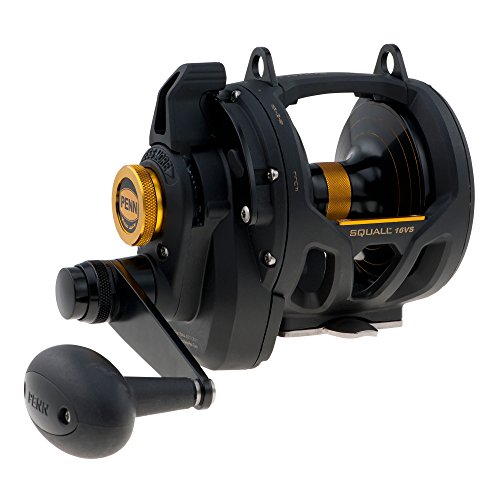
PENN 16VS Squall Lever Drag 2 Speed Reel, Graphite, Multicolor, 725/20, IGFA16, Big Game Saltwater Fishing
Chosen because it specifies Graphite and Multicolor.
View on Amazon
8000/10000/14000 Heavy Duty Saltwater Fishing Spinning Open Face Surf Reel,6+1bb 4.8:1 Gear Ratio, 66lbs MAX Drag Heavy Long Casting Inshore Monster Fish by Quorelynx (14000)
Chosen because it specifies 6+1bb 4.8:1 Gear Ratio.
View on Amazon
VBESTLIFE TR12000 All Metal Trolling Fishing Reel, 3.4:1 Speed Ratio Carbon Fiber Brake Washer Trolling Reel for Offshore Boat Saltwater Angler
Picked as a relevant option in this category.
View on AmazonAll 6 Picks in Detail
1. Round Aluminum Lever-Drag Jigging Reel – Best for vertical jigging
As an Amazon Associate we earn from qualifying purchases at no extra cost to you.

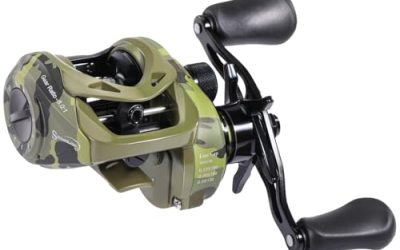
This listing is a generic round-profile conventional reel with a lever drag, marketed for saltwater jigging, deep ocean and offshore trolling. The title text we can see is long on keywords and short on numbers, so the practical advice is to read the product page for line capacity, gear ratio and drag before buying. It fits a boat angler who drops jigs straight down for small yellowfin, blackfin or bonito and who already owns a short jigging rod with a conventional reel seat. It does not need to do everything, and for that narrow job a compact aluminum reel with a lever drag is a reasonable tool. For trolling live or dead baits behind a boat, a reel with a published two-speed gearbox and capacity chart is the more dependable choice.
- Reel type: conventional round reel with a lever drag
- Material: aluminum body per the listing title; gear and drag material not stated, so confirm on listing
- Marketing use: jigging, trolling, deep ocean and big game, as worded by the seller
- Line capacity, gear ratio and maximum drag: confirm on listing
- Retrieve side: confirm on listing before ordering
Pros
- Round aluminum profile is compact and comfortable on a short jigging rod
- Lever drag gives quick, repeatable drag changes when a fish runs
Cons
- The listing title does not state capacity or drag figures, so sizing takes extra checking
- Marketed for several jobs at once, which usually means it is a jack of all trades for tuna
Compared with the PENN 16VS, it is a jigging-first tool with fewer published numbers, so it is the pick only if vertical jigging is the whole plan.
2. SAMOLLA Two-Speed Tuna Reel – Best for a big-game style two-speed setup

SAMOLLA sells this as a heavy-duty tuna reel for deep sea fishing and big-game trolling. The listing states a two-speed gearbox with 3.1:1 and 1.3:1 ratios and an 83 pound maximum drag. Retailer fields describe CNC metal construction, hardened stainless steel gears, an anodized aluminum spool and a weight near 4.3 pounds. That is a lot of reel on paper, and it suits an angler who wants a large conventional trolling reel for yellowfin or bigger fish and accepts less brand history.
- Gearing: 3.1:1 high speed and 1.3:1 low speed, per the listing title
- Maximum drag: 83 pounds as advertised; treat this as a ceiling, not a working setting
- Build: CNC metal body with a gold finish, anodized aluminum spool and stainless steel gears, per retailer fields
- Weight: about 4.3 pounds per retailer fields, so plan for a heavier rod and a harness
- Line capacity: confirm on listing
Pros
- Very low 1.3:1 gear gives strong cranking power on a sulking fish
- Large frame leaves room for long runs of heavy braid
Cons
- Advertised drag is far above what an angler can hold in a stand-up fight
- Seller pages for similar models carry different specs, so check the exact variant
Next to the PENN 50VSW it offers more advertised drag and a lower gear, but the PENN’s published spec sheet and service history make it the safer choice.
3. PENN Squall 50VSW Lever Drag – Best overall for yellowfin-class trolling

The 50VSW is the size where tuna fishing gets serious. It is an IGFA 50 class reel with a Quick-Shift two-speed gearbox, a Dura-Drag lever system and capacity for long runs. The listing shows 890 yards of 50 pound mono, and PENN’s specifications give very large braid capacity for the size. It is a sound match for yellowfin from the 30 to 80 pound range, big wahoo and mahi, and it suits both trolling rods and stand-up rods in the 50 to 80 pound class.
- Gear ratio: 2.9:1 high and 1.5:1 low, per PENN
- Maximum drag: 40 pounds, per PENN
- Line capacity: 1,550 yards of 30 pound, 890 of 50 pound and 565 of 80 pound mono; 2,485 yards of 65 pound, 2,145 of 80 pound and 1,835 of 100 pound braid
- Bearings: four stainless steel; frame and sideplates are graphite, spool is forged and machined aluminum
- Weight: about 55.6 ounces per retailer spec tables
Pros
- Published numbers are consistent across the maker’s spec sheet and retailers
- Two-speed gear and lever drag cover trolling, fighting and cranking up from depth
- Capacity is generous enough for 80 pound braid with room to spare
Cons
- Graphite frame is lighter than machined aluminum but less rigid under extreme load
- Too large and heavy for school-size fish on light rods
Against the SAMOLLA it gives up some advertised drag but offers a documented, widely supported design.
4. PENN Squall 16VS Lever Drag – Best for school tuna and light line
The 16VS is the small sibling, listed as IGFA 16 with 725 yards of 20 pound mono. It matches the listed facet only partly: it is a capable reel for school-size yellowfin, bonito, skipjack and small blackfin, and a fine option for light-line trolling or short stand-up sessions. It is not a reel for fish you expect to fight for an hour, so we place it as a runner-up for true big-game tuna while recommending it where fish are small. Pair it with a rod in the 20 to 30 pound class and a 20 to 30 pound braid or mono mainline, and keep the drag well below the listed ceiling so the washers stay smooth. If a larger fish takes you into the backing, the reel will tell you quickly that it is at its limit, which is exactly when a 50-class reel earns its extra weight.
- Gear ratio: 4.5:1 high and 2.1:1 low, per PENN
- Maximum drag: 26 pounds, per PENN
- Line capacity: 1,090 yards of 15 pound, 725 of 20 pound and 540 of 30 pound mono; 1,490 yards of 30 pound, 1,040 of 50 pound and 865 of 65 pound braid
- Bearings: four stainless steel; graphite frame with a forged aluminum spool
- Weight: about 38.5 ounces per retailer spec tables
Pros
- Light enough for long days and lighter rods
- Faster retrieve than the 50VSW when fish run toward the boat
Cons
- Limited drag for fish above roughly 40 to 50 pounds
- One retailer shows conflicting numbers, so confirm on PENN’s page
Choose it over the 50VSW only if your fish are small; otherwise step up a size.
5. Heavy-Duty Surf Spinning Reel (8000/10000/14000) – Runner-up: surf and inshore, not a tuna reel

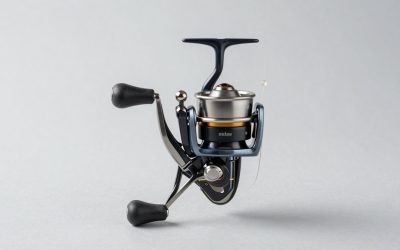
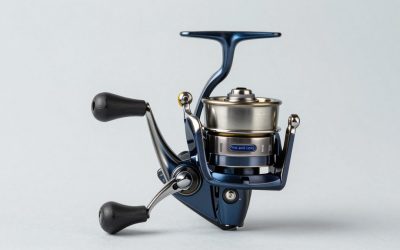
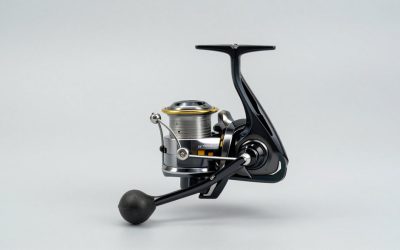
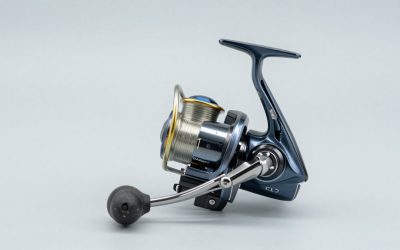
This spinning reel is sold in three sizes with a 4.8:1 gear ratio, six ball bearings plus one roller, and a claimed 66 pound maximum drag. The seller mentions tuna among other big fish, but the design is a long-casting surf and inshore spinner. Seller pages for this model show different maximum drag claims, so treat the number as marketing. It fits an angler who fishes from the beach, a jetty or a boat for inshore species and wants one oversized spinner. Cast it with a long rod and braid for distance, and use it for striped bass, big drum or shark in the surf. If you want to stick-bait tuna from a boat, look for a sealed offshore spinning reel from a maker that publishes its drag figures instead.
- Reel type: open-face spinning, sizes 8000, 10000 and 14000
- Gear ratio: 4.8:1 per the listing title
- Bearings: 6+1 per the listing title
- Body: retailer fields describe a graphite or nylon body with an aluminum spool
- Drag and capacity by size: confirm on listing
Pros
- Spinning layout is easy to cast for surf and inshore work
- Large sizes hold plenty of braid
Cons
- Not built for the sustained, high-load runs of offshore tuna
- Drag claims differ between seller pages
It sits well below the PENN reels for tuna and belongs on the list only for anglers who prefer spinning gear.
6. VBESTLIFE TR12000 Trolling Reel – Runner-up for light trolling and learning

The TR12000 is a drum-style trolling reel with a 3.4:1 speed ratio and a carbon fiber brake washer. The title says all metal, but descriptions of this same reel under other brand names mention reinforced nylon, so confirm the body material. It is a simple reel for anglers who want to troll lighter baits or lures from a boat without paying for a lever-drag system. It is not a substitute for a lever-drag tuna reel on larger fish. Use it with a stout rod, set the drag by feel with a scale if you can, and keep lines and leaders matched to the fish you expect. For anything heavier than a small tuna or a bonito, step up to one of the PENN reels above.
- Gear ratio: 3.4:1 per the listing title
- Drag: carbon fiber washer system; maximum drag differs between sellers, so confirm on listing
- Style: large trolling drum with a big handle
- Bearings and line capacity: confirm on listing
- Body material: confirm on listing
Pros
- Simple operation that is easy to learn
- Large drum holds a lot of line for its footprint
Cons
- No lever drag or second gear for fighting heavy fish
- Spec sheets vary between sellers of the same reel design
Compared with the 16VS, it offers less control and fewer documented numbers, which is why it is a runner-up.
Specs Compared
| Reel | Type | Gear ratio | Max drag (as stated) | Line capacity | Class fit |
|---|---|---|---|---|---|
| Round Aluminum Lever-Drag Jigging Reel | Conventional, lever drag | Confirm on listing | Confirm on listing | Confirm on listing | Jigging, small to mid tuna |
| SAMOLLA Two-Speed Tuna Reel | Conventional, two-speed | 3.1:1 / 1.3:1 | 83 lb (advertised ceiling) | Confirm on listing | Big-game trolling |
| PENN Squall 50VSW | Conventional, lever drag, two-speed | 2.9:1 / 1.5:1 | 40 lb | 890 yd of 50 lb mono; 2,145 yd of 80 lb braid | IGFA 50, yellowfin class |
| PENN Squall 16VS | Conventional, lever drag, two-speed | 4.5:1 / 2.1:1 | 26 lb | 725 yd of 20 lb mono; 1,040 yd of 50 lb braid | IGFA 16, school tuna |
| Heavy-Duty Surf Spinning Reel | Open-face spinning | 4.8:1 | 66 lb in the title; sellers differ | Confirm on listing | Surf and inshore |
| VBESTLIFE TR12000 | Trolling drum, carbon-washer drag | 3.4:1 | Confirm on listing | Confirm on listing | Light trolling |
How We Chose These
This guide is based on desk research, not on-the-water use. We started from the six listings supplied for this page and compared what each listing title says with the maker’s published specification pages, retailer specification fields and widely used offshore tackle guides. We weighted gear ratio, stated drag, line capacity and the type of drag system most heavily, because those decide whether a reel can handle a tuna. Where a listing did not state a figure, we said so and told you to confirm it on the product page. Reels that did not fit the tuna facet well were placed as runner-ups rather than hidden, so you can see exactly why.
What to Look For
Reel class and line capacity
Tuna reels are sized by class, which tells you the heaviest line the reel is designed for. A 16-class reel suits fish up to about 40 pounds, a 30-class reel handles mid-size yellowfin on stand-up rods, and a 50-class reel is the common choice for yellowfin over 80 pounds, big wahoo and light marlin work. Capacity matters as much as strength: for trolling, most guides suggest at least 500 to 650 yards of line on the spool so a running fish cannot empty it. Braid packs far more line than mono on the same spool, which is why braid capacity numbers look so large. Always compare the same line type and test rating when comparing reels.
Drag: lever, knob and the numbers on the box
Lever drag lets you set a strike position, a fight position and a full position with one motion, which is why most serious tuna reels use it. Knob-style drag works too, but changing settings mid-fight is slower and less repeatable. Maximum drag ratings are measured with a dry, new washer stack and are usually higher than anything you can hold for long. A practical rule: set strike drag at about one quarter to one third of your line breaking strength. On 80 pound braid that is roughly 20 to 27 pounds, so a reel with 40 pounds of listed drag is plenty, while an 83 pound claim adds little real-world benefit.
Gear ratio, two speeds and retrieve per crank
Retrieve per crank equals the spool diameter times the gear ratio, so ratio alone does not tell the whole story. On the PENN 50VSW, retailer tables list about 33 inches per crank in high gear and 17 inches in low gear. At 100 cranks, that is roughly 92 yards in high and 47 yards in low, which shows why a two-speed reel matters: high gear recovers line when a fish swims toward you, and low gear provides leverage when the fish sulks deep. For jigging, a faster ratio helps keep pace with the lure, but for trolling and fighting, power matters more than speed.
Materials, sealing and saltwater care
Machined aluminum frames resist flexing under heavy load, while graphite frames are lighter and corrosion proof. Stainless steel gears and sealed or shielded bearings help the reel live in salt air. None of that replaces care: rinse the reel gently with fresh water after each trip, never blast it with a hose that can push salt into the drag, loosen the drag for storage and let the reel dry. Avoid heavy grease on drag washers. If a listing title says all metal but retailer descriptions mention nylon, treat the material as unconfirmed.
Worked example: matching a reel to a target fish
Suppose you troll for 40 to 60 pound yellowfin from a center-console boat. You want 80 pound braid, 600 yards or more on the spool and a strike drag near 20 pounds. The PENN 50VSW lists 2,145 yards of 80 pound braid and 40 pounds of maximum drag, so it clears every requirement with room to spare. A 16-class reel would hold the line but would be near its drag ceiling when a fish of that size takes a long run. Work backward from your biggest realistic fish, not from your average catch.
Remember the rest of the rig: a tuna reel only performs as well as the rod and leader in front of it. Match rod line rating to the reel class: a 30 to 50 pound stand-up rod pairs with a 30-class reel, and a 50 to 80 pound rod with a 50-class reel. Use fluorocarbon leader sized to the fish, commonly 60 to 100 pound for yellowfin, with strong swivels, crimps and hooks rated well above the leader. Check every knot and connection before each trip, because failures are far more often a knot or a swivel than the reel.
Questions
What size reel do I need for yellowfin tuna?
For school-size yellowfin under 40 pounds, a 16- to 30-class reel works. For fish above 50 pounds, most captains move to a 50-class reel with 80 pound braid. Match the reel to a rod rated for the same line class.
Is a lever drag better than a knob drag for tuna?
Lever drag is generally preferred because it provides quick, repeatable drag settings and smooth pressure under load. Knob-drag reels still catch tuna, but they are harder to adjust mid-fight and are best for smaller fish.
Can a spinning reel catch tuna?
Yes, but only large offshore spinning reels with sealed, high-quality drags are used for stick baiting and popping. A surf-style spinner with a generic drag is not designed for that load and is best kept for inshore fish.
How much drag do I really need?
Set strike drag at roughly one quarter to one third of your line test, so 20 to 27 pounds on 80 pound braid. A reel with 40 pounds of maximum drag covers that, and a much higher claim does not make a fight easier.
How much line should be on a tuna reel?
For trolling, at least 500 to 650 yards is a common guideline so a hooked tuna cannot spool you. Check the maker’s capacity chart for your exact line diameter, since braid and mono pack very differently.
Do I need a two-speed reel?
For fish over about 40 pounds, a two-speed reel helps a lot. High gear recovers line quickly, and low gear gives you leverage to lift a heavy fish from depth without wearing yourself out.
Update History
- October 14, 2026 – Initial publication; product set drawn from current catalog listings.
- Check the product page for current specifications and availability before buying.
Sources
- Manufacturer product and specification pages for PENN, plus seller descriptions for SAMOLLA and VBESTLIFE-branded reels
- Retailer listing titles and specification fields, including tackle-shop spec tables for the PENN Squall series
- Offshore tackle guides and angling forums covering tuna reel class, line capacity and drag settings
Write Your Review
No reviews yet. Be the first to share your experience!