
Key takeaways
- Learn how to fish a jig for bass: pick jig weight by depth, match the trailer, and use a drag-and-pause retrieve that gets more bites.
Start with a 3/8-ounce jig, a trailer that matches the size of the baitfish or crawfish in the lake, and a slow drag-and-pause retrieve along the bottom. Go down to 1/4 ounce in shallow, cold or clear water, and up to 1/2 ounce or more when you are fishing 10 feet or deeper, in wind, or through thick cover. This guide is for anglers who own a medium-heavy rod and want one dependable way to catch largemouth and smallmouth bass near wood, rock, docks and grass edges, especially from late fall through early spring and again in summer on deeper structure.
Quick Answer
- Default setup: 3/8 oz jig, 7’0″ to 7’6″ medium-heavy fast rod, 12 to 17 lb fluorocarbon, compact craw trailer.
- Match weight to depth: 1/4 to 3/8 oz under 8 feet, 1/2 oz from 8 to 15 feet or in cover, 3/4 to 1 oz past 15 feet or in current.
- Retrieve: cast, let it hit bottom on a semi-slack line, drag 12 to 24 inches, then pause for 2 to 5 seconds. Most bites come on the pause or as a heavy, mushy feeling.
- Hookset: reel down until the line is tight, then sweep the rod up and to the side. Do not snap back with a slack line.
- Cold water means smaller and slower. Warm water means you can hop it more and use a bulkier trailer.
What You Need
A jig is a simple lure, but it only works if the gear can feel the bottom and drive a large hook through a bony mouth. Choose by specification rather than by name.
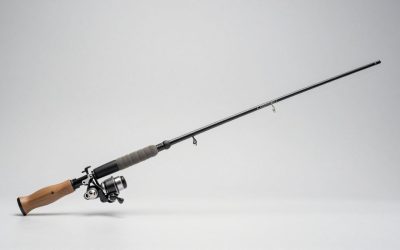
- Rod: 7’0″ to 7’6″ medium-heavy, fast action for football and swim jigs and for most open-water work. For flipping into heavy cover, use a 7’3″ to 7’11” heavy-power, extra-fast rod.
- Reel: a baitcasting reel with a gear ratio around 7:1 so you can pick up slack quickly after a long pitch or a bite.
- Line: 12 to 17 lb fluorocarbon for football jigs over rock and gravel. For flipping and punching, 20 to 25 lb fluorocarbon or 50 to 65 lb braid.
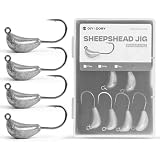
- Jig weights: keep 1/4, 3/8, 1/2 and 3/4 oz heads. That range covers most water you will meet.
- Hook: jigs usually come with a 3/0 to 5/0 hook. Larger hooks suit thick line and big trailers; check that the point is sharp enough to catch your thumbnail without sliding.
- Knot: Palomar or improved clinch on fluorocarbon; Palomar on braid. Wet the line before cinching and trim the tag end to a short length.
- Safety: a jig hook is heavy and the cast is a pitch or a short overhand throw. Wear polarized glasses and check behind you before every cast, and use pliers to remove a hook from a bass.
Choose the Jig Weight and Style
Weight controls how fast the jig falls, how well you feel the bottom, and how much cover it can slide through. Bulky trailers slow the fall, so if the jig is too heavy or too light, you can often fix the problem by changing the trailer instead of the head.
| Situation | Weight | Jig style | Line |
|---|---|---|---|
| Shallow, clear or cold water, under 8 ft | 1/4 to 3/8 oz | Finesse or compact jig | 10 to 14 lb fluorocarbon |
| General all-around, 5 to 12 ft | 3/8 to 1/2 oz | Casting jig | 12 to 17 lb fluorocarbon |
| Rock, gravel or shell, 10 to 25 ft | 1/2 to 3/4 oz (up to 1 oz deeper) | Football jig | 12 to 17 lb fluorocarbon |
| Flipping wood, docks, bushes | 3/8 to 3/4 oz | Flipping jig with stiff weed guard | 20 to 25 lb fluorocarbon or 50 to 65 lb braid |
| Dense grass or mats | 3/4 oz and up | Flipping or punching head | 50 to 65 lb braid |
| Wind or current | Step up one size | Any | Same |
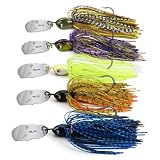
The football head keeps the hook upright and walks over rock without wedging. A flipping head is flat-bottomed and narrow so it slides through limbs and grass. A swim jig is lighter and has a more streamlined head for a steady retrieve.
Pick the Trailer
The trailer adds bulk, action and a silhouette. Think about the forage. Crawfish call for a compact craw with short claws. Bluegill and shad call for a thicker paddle-tail or a chunk with more flare.
- Slide the trailer onto the hook point, with the head of the trailer touching the jig collar. Run the point out so the trailer sits straight; a crooked trailer makes the jig roll on the fall.
- Trim the skirt so it ends about 1/4 inch short of the hook bend, or roughly even with the tip of the trailer, so short bites still hit the hook.
- Use a small trailer (2 to 3 inches) when the water is under about 50 degrees or very clear. Use a 3.5 to 4.5 inch trailer in warm, stained water or heavy cover.
- Match color to the water. Natural browns, greens and pumpkin shades work in clear water. Black and blue or darker tones show up better in stained or dark water.
How to Fish It: Step by Step
- Cast or pitch to a target. Aim past the cover and let the jig land softly. A splash can spook bass in clear shallow water.
- Watch the line on the fall. Keep a little slack so the jig falls naturally. A tick, a jump in the line or the line moving sideways usually means a bass took it on the way down.
- Feel for the bottom. A hard thud usually means rock or clay. A soft landing means mud or grass. Note what it feels like so you can recognize a change.
- Drag, do not rip. Lift the rod tip 12 to 24 inches, then reel up slack as you lower it. The jig should crawl along the bottom. Pause for 2 to 5 seconds, longer if the water is cold.
- Hop once in a while. A short, sharp lift of 6 to 12 inches makes the trailer kick up. In warm water, a faster hop can trigger reaction bites.
- Feel for the bite. It may feel like a thump, but often it is only extra weight, a mushy spot, or the line moving. If it feels different from the bottom, set the hook.
- Set the hook. Reel to remove slack, then sweep the rod up hard. A medium-heavy rod bends deep, so use your hips, not only your wrist. Keep pressure steady so the hook seats.
Match the Retrieve to Season and Water
| Condition | Where to cast | Retrieve | Trailer |
|---|---|---|---|
| Cold water, under 50 F | Deep wood, rock bluffs, channel edges | Very slow drag, long pauses | Small craw, 2 to 3 in. |
| Spring, 50 to 65 F | Shallow wood, rock banks near spawning flats | Drag and short hops | Compact craw |
| Summer, warm water | Deep points, humps, docks in shade, grass edges | Steady drag, hop on rock | Larger chunk or paddle tail |
| Fall | Creek channels, points, shad schools along banks | Swim or drag along the bottom | Matches the baitfish |
| Muddy or stained water | Hard cover close to shore | Slow, noisy, bulky | Dark color, extra bulk |
| Clear water | Edges of cover, deeper rock | Slow, natural | Natural color, small profile |
Temperature ranges here are general guides. Lakes in different regions warm at different rates, and smallmouth can be active at slightly cooler temperatures than largemouth.
Common Mistakes
- Hopping too hard. Big hops are fun but spook bass in cold or pressured water. Drag and pause instead.
- Using the wrong weight. If you feel nothing, go heavier. If the jig falls too fast for bass to react, go lighter or add a bulkier trailer.
- Setting the hook too early or with slack. Reel down first. Then sweep the rod. Without a tight line the sweep just moves the line.
- Dull hooks. A hook that has hit rock may roll over or blunt. Check the point every few casts and replace it when it will not grab a fingernail.
- Line too light for cover. Thin line in wood or grass breaks on the hookset. Move up in line size when the cover is thick.
- Ignoring the fall. Many bites happen before the jig lands. Watch the line instead of looking away.
Questions
What size jig should I start with for bass?
A 3/8-ounce jig is the most flexible starting point. It is heavy enough to feel the bottom in water around 5 to 12 feet and light enough to fall naturally. Move up or down by 1/8 ounce at a time as depth, wind and cover change.
Is fluorocarbon or braid better for jig fishing?
Fluorocarbon is a good choice in open water and clear conditions because it is low-visibility and sinks. Braid is stronger and cuts through grass, so it is better for punching and flipping into thick vegetation. Many anglers use a fluorocarbon leader on braid when they want both.
How do I know when a bass bites a jig?
The bite is often subtle. You may feel a tick, a spongy weight, or notice the line swim sideways or jump on the fall. If the jig feels different from how it felt on the last cast, reel down and set the hook.
Can I fish a jig in cold water?
Yes. Jigs are among the best choices in cold water because they can be fished slowly and are compact. Use a smaller trailer, a slow drag, and pauses of several seconds.
Should I trim the skirt on a bass jig?
Trimming helps when bass are biting short or when you want a slimmer profile. Trim a bit at a time, until the skirt ends near the hook bend, and keep strands even so the jig falls straight.
Update History
- October 15, 2026 – Initial publication; details checked against current manufacturer guidance and angling references.
- Conditions, regulations and tackle specifications vary by water and region; check local rules before you fish.
Sources
- Bass Angler Magazine, jig fishing system and weight guidance
- XMark Outdoors Fishing Academy, jig weight and bass jig guides
- Tactical Bassin’, jig and trailer buyer’s guides by style
- Bass Fishing Blueprint, jig techniques and trailers

Write Your Review
No reviews yet. Be the first to share your experience!