
Key takeaways
- Only external capacity is listed: Without pouch dimensions, “20 bags” may not accommodate full-size soft plastics.
- Vague material claims: “Heavy duty” does not replace a denier rating, lining description, or zipper specification.
- No chemical guidance: The seller should explain whether the pouches are intended for soft plastics.
- Unreinforced strap anchors: Look for box stitching or visible reinforcement where the strap meets the bag.
- A waterproof claim with fabric seams: Unless the seams and zippers are sealed, treat the bag as water-resistant.
- Photos showing an unrealistically empty interior: Verify whether dividers, pouches, or trays shown in the images are included.
- Zippers that barely close: A full organizer needs room for expansion; forced zippers fail sooner.
Soft plastics are productive, versatile, and notoriously messy to store. A package that looks neatly sealed at home can leak oil, deform neighboring baits, or turn a small tackle box into a sticky drawer after a warm afternoon in the truck. The best tackle box buying guide for soft plastics starts with a simple truth: storage designed for hard lures is not automatically suitable for soft bait.
Common mistakes include buying a box with too few individual pouches, choosing a container that cannot stand upright, and assuming “water-resistant” means waterproof. Anglers also underestimate capacity. Twenty small bait bags may fit comfortably, while twenty bags of bulky creature baits, worms, or swimbaits may require a much larger organizer. Before comparing colors or pocket counts, match the storage system to the way you fish.
Our top picks
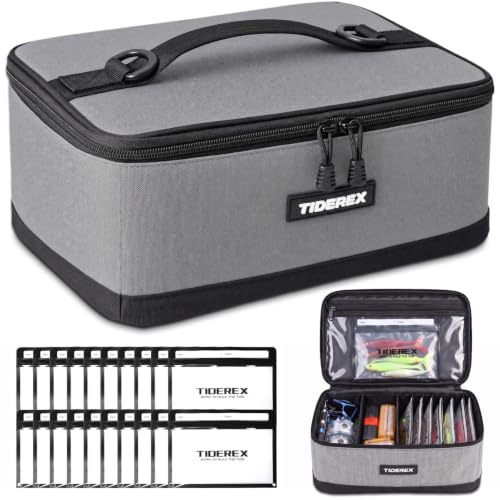

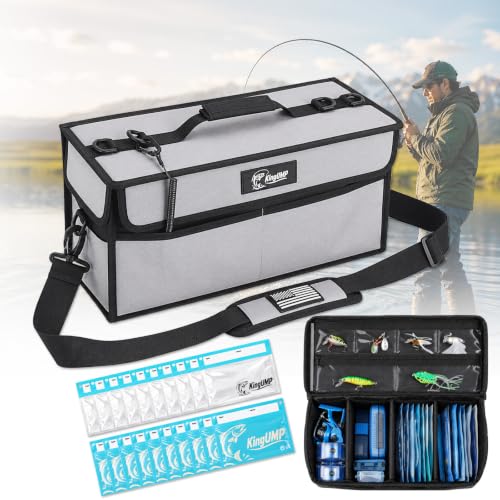

As an Amazon Associate we earn from qualifying purchases at no extra cost to you. Ratings are shown as listed on Amazon.
Decide These 3 Things First
- How much bait will you carry? Count the packages you normally bring, then add 25% to 50% for growth and spare colors. A 10- to 12-bag system suits short outings; 20 bags is a practical starting point for general freshwater fishing.
- Will the bag live in a boat, vehicle, or on your shoulder? Boat storage favors a rigid, stackable base. Shore anglers generally need a lighter shoulder or sling bag. If it stays in a hot vehicle, prioritize sealed pouches and a heat-resistant, easy-clean interior.
- Do you need bait storage only, or a complete tackle station? A bait binder with 20 pouches is efficient for soft plastics. A larger organizer with adjustable dividers is better if you also carry hooks, weights, reels, tools, or hard lures.
Size and Capacity
Capacity should be measured by usable pouch space, not just the outside dimensions of the bag. A compact soft-bait organizer may measure approximately 12 by 9 by 4 inches and weigh 1 to 2 pounds when empty. That is convenient for a backpack, but it may be tight for thick creature baits or several 5- to 6-inch swimbait packages.
For most anglers, look for 16 to 24 individual pouches. A 20-pouch design is a useful middle ground because it separates colors and profiles without becoming excessively bulky. If each pouch is roughly 8 by 10 inches, it can accommodate many standard retail bags, but confirm the actual opening and gusset depth before buying.
For boat or vehicle use, a larger 20-liter organizer measuring about 15 by 10 by 8 inches can hold soft plastics plus hooks, terminal tackle, and tools. Avoid filling every compartment to the zipper line. Leave at least 10% of the interior open so pouches remain easy to remove and the lid closes without pressure.
Material and Chemical Resistance
Soft plastics contain oils, salts, and plasticizers that can stain or damage unsuitable materials. The individual bait pouch is therefore more important than the outer fabric. Clear or translucent pouches make color selection faster, while coated nylon or polyester keeps the exterior easier to wipe clean.
For regular use, 600-denier polyester or nylon is a sensible minimum. A 900-denier exterior offers more abrasion resistance for boat decks and rough banks, though it may add weight. Look for a wipe-clean lining and pouch material described as PVC, TPU, or another plastic compatible with soft baits. Do not assume compatibility from a clear appearance alone; follow the bait manufacturer’s storage guidance.
Water resistance is useful for spray and rain, but it is not the same as submersion protection. A water-resistant bag with covered zippers can protect contents during ordinary exposure. If the organizer may sit in standing water, use a separate dry box or waterproof case rather than relying on a fabric tackle bag.
Construction and Organization
Good construction prevents a storage system from becoming a sagging pile of bait bags. Check for reinforced stitching at the handle, shoulder-strap anchors, and divider attachment points. A box-style base should remain upright when empty; otherwise, it will be harder to load and retrieve from a boat compartment.
Adjustable dividers are valuable when the organizer carries more than factory bait bags. They can create a narrow section for hooks and weights or a wider bay for reels and tools. However, dividers should fasten securely with hook-and-loop panels or molded tracks. Loose partitions waste space and may collapse when the bag is carried vertically.
Individual pouches should have full-length openings rather than tiny top slots. A zipper that opens at least 7 inches makes it easier to remove a slippery bait package without dumping the contents. Clear labeling windows or writable tabs are useful when several pouches contain similar colors.
Comfort and On-the-Water Performance
An organizer that weighs 2 pounds empty can become a 10- to 15-pound load after adding baits, terminal tackle, and tools. For shore fishing, choose a padded shoulder strap at least 1.5 inches wide, with a length adjustment of approximately 30 to 55 inches. A top handle is helpful for short carries, but it should be padded or wrapped if the bag will be moved frequently.
For boat use, a firm base and low center of gravity matter more than backpack features. Exterior pockets should hold small items without protruding far enough to catch on rails or seats. A 1- to 2-inch base clearance can help keep the bottom away from minor deck moisture, but it does not make the bag waterproof.
Look for two-way zipper pulls on the main compartment, bright interior fabric, and drainage or ventilation features when available. Bright linings make small hooks easier to spot. Ventilation is helpful after a damp trip, but let bait packaging dry before closing the bag for long-term storage.
Price Tiers
Budget soft-plastic organizers generally cost about $10 to $20. At this level, expect basic fabric, simple zippers, and approximately 10 to 20 pouches. A listing such as a 20-pouch bait binder near $9.98 can be attractive for a first setup, but inspect the pouch dimensions, stitching, and divider design carefully.
Midrange bags typically cost $20 to $35. They often add sturdier fabric, better handles, clearer pouches, and more dependable organization. Examples around $19.99 to $27.99, including TideRex-style bags with 20 DIY or clear bait bags, fall into this practical range. The best value is usually here if you fish regularly but do not need a fully rigid professional case.
Premium soft-bait storage commonly runs from $40 to $90 or more. The extra cost should provide a specific benefit: a rigid waterproof shell, modular attachment system, heavy-duty hardware, or substantially better capacity. A higher price alone does not prove that the pouches are chemically compatible or that the bag will protect bait from heat.
Warranty and Return Protection
Soft-bait storage is a simple product, so warranty terms should be easy to understand. Look for at least a 30-day return window for sizing or zipper problems and, ideally, a six-month to one-year warranty against manufacturing defects. The warranty may exclude normal wear, overloaded compartments, chemical damage, and damage caused by storing incompatible baits.
Keep your receipt and photograph a failed zipper, torn seam, or broken strap before attempting a repair. Check whether the seller requires the original packaging. A return policy is particularly important when dimensions are listed only as external measurements or when pouch sizes are not clearly specified.
Delivery and Assembly
Most soft-plastic bags arrive ready to use, but “assembly” may mean attaching dividers, labeling pouches, or installing a shoulder strap. Allow 10 to 20 minutes to configure an organizer before its first trip. Test every zipper, fill each pouch with representative bait, and verify that the loaded bag still closes without strain.
Delivery packaging can compress fabric walls or bend removable dividers. Let the bag regain its shape, then inspect seams and hardware. If ordering online, compare the packed dimensions with your boat compartment, backpack, or vehicle storage area. A bag measuring 15 inches wide may not fit an opening that is only 14 inches wide, even if the interior capacity looks ideal.
Spec Checklist
| Spec | Budget | Mid | Premium |
|---|---|---|---|
| Typical price | $10–$20 | $20–$35 | $40–$90+ |
| Individual pouches | 10–20 | 16–24 | 20–40 or modular |
| Exterior fabric | 300D–600D | 600D–900D | 900D, coated fabric, or rigid shell |
| Approximate dimensions | 10–13 × 7–10 × 3–5 in. | 12–16 × 8–11 × 4–8 in. | 14–20 × 10–14 × 6–10 in. |
| Empty weight | 1–2 lb. | 1.5–3 lb. | 3–6 lb. |
| Best use | Occasional trips and small loads | Regular shore or boat fishing | Large collections and full tackle systems |
Red Flags
- Only external capacity is listed: Without pouch dimensions, “20 bags” may not accommodate full-size soft plastics.
- Vague material claims: “Heavy duty” does not replace a denier rating, lining description, or zipper specification.
- No chemical guidance: The seller should explain whether the pouches are intended for soft plastics.
- Unreinforced strap anchors: Look for box stitching or visible reinforcement where the strap meets the bag.
- A waterproof claim with fabric seams: Unless the seams and zippers are sealed, treat the bag as water-resistant.
- Photos showing an unrealistically empty interior: Verify whether dividers, pouches, or trays shown in the images are included.
- Zippers that barely close: A full organizer needs room for expansion; forced zippers fail sooner.
FAQ
How many soft-plastic bags should a tackle box hold?
For most anglers, 16 to 24 individual pouches is enough for a day or weekend of fishing. Choose 10 to 12 pouches for a compact minimalist load, or 30 or more if you carry multiple species, sizes, and color patterns.
Are clear bait pouches better than opaque ones?
Clear pouches make color and bait shape visible without opening each compartment. Opaque pouches can block sunlight and hide stains, but they require labels. Either option can work if the material is compatible with soft plastics and the zipper closes securely.
Can soft plastics stay in the tackle bag year-round?
They can, provided the original packaging is sealed, the pouches are compatible, and the bag is kept away from extreme heat. Avoid leaving the organizer in a hot vehicle for extended periods. Separate leaking packages promptly and clean residue before it contacts other baits.
Is a tackle box or a bait binder better?
A bait binder is better when your priority is quick access to many soft-plastic packages. A tackle box with adjustable compartments is better when you also carry hooks, weights, tools, or hard lures. Many anglers use a 20-pouch bait binder inside a larger box or boat locker for the most flexible setup.





Write Your Review
No reviews yet. Be the first to share your experience!