
Key takeaways
- Searches a large area quickly. Instead of following a shoreline and guessing where cover is located, you can scan both sides of the boat and investigate promising returns.
- Reveals structure beside the boat. A brush pile 40 feet to your right may never appear clearly on down sonar, but side imaging can show its position and shape.
- Helps you cast more efficiently. Once you identify a rock pile, laydown, ditch, or weed edge, you can position the boat and cast to the target rather than fishing featureless water.
- Pairs well with GPS mapping. Marking a waypoint over productive cover makes the information useful on future trips. GPS does not make the image better, but it helps you return to what you found.
- Can show the relationship between fish and cover. Fish may appear as small bright marks or shadows near objects. The most valuable information is often not a perfect fish image, but seeing that fish are holding beside a specific type of structure.
- Improves confidence on unfamiliar lakes. Side imaging can shorten the time needed to locate fishable areas, particularly when you are exploring a new reservoir or large flat.
The Short Answer
Yes, side imaging is worth it if you regularly fish structure, cover, weed lines, or unfamiliar water and can keep your boat moving slowly enough to scan it. If you mostly fish vertically, troll open water, or use a small kayak where mounting and battery demands are inconvenient, traditional CHIRP sonar and GPS may be the better value.
The key condition is this: side imaging pays off when you will use it to search a meaningful area before casting. It is not simply a sharper version of the sonar screen beneath your boat. It is a wide-area scouting tool.
Our top picks


As an Amazon Associate we earn from qualifying purchases at no extra cost to you. Ratings are shown as listed on Amazon.
What You Actually Get
Traditional down-looking sonar shows what is directly under the transducer. Side imaging adds two narrow, fan-shaped beams that project left and right from the boat. The unit then turns those returns into a picture-like view of the bottom, including changes in depth, rocks, timber, brush piles, docks, drop-offs, and sometimes individual fish near cover.
On a typical side-imaging unit, the useful scanning width may range from roughly 100 to 240 feet on each side, depending on the model, water depth, frequency, sensitivity, and image quality settings. More range is not automatically better. A wider range covers water quickly, but fine objects can look smaller and less distinct. Many anglers start with a moderate range, such as 60 to 100 feet per side, when they want to identify cover accurately.
Side imaging works best while the boat is moving. At about 2 to 5 miles per hour, the screen can build a useful map-like image while you cover water. If you stop completely, the display generally becomes less informative because the system depends on movement to create a continuous picture. This is different from 2D sonar, which remains useful when you are sitting over a spot.
A 7-inch display, such as those found on the Humminbird Helix 7 series, is a practical entry point. The diagonal measurement is 7 inches, and the overall housing is commonly around 9 inches wide and 5 inches tall, depending on the bezel and mount. It is large enough for one angler to read, but side-imaging detail is easier to interpret on a 9- or 10-inch screen, especially when split between chart and sonar views.
Expect a 12-volt installation and a separate transducer mounted on the transom, trolling motor, or a specialized bracket. A typical small fish finder may draw roughly 0.5 to 2 amps, although brightness, networking, GPS use, and the exact model change that figure. On a kayak or small boat, battery capacity matters: a 10-amp-hour battery can provide a useful outing, but cold temperatures, aging batteries, and other electronics reduce real-world runtime.
The Humminbird Helix 7 G4 GPS Fish Finder with Transducer and MEGA Side Imaging is listed at $649.98, while the Humminbird 411590-1 Helix 7 CHIRP SI GPS G4 is listed at $579.99. The difference is meaningful, but both are in the range where proper transducer placement and learning the screen matter as much as the feature list.
Pros
- Searches a large area quickly. Instead of following a shoreline and guessing where cover is located, you can scan both sides of the boat and investigate promising returns.
- Reveals structure beside the boat. A brush pile 40 feet to your right may never appear clearly on down sonar, but side imaging can show its position and shape.
- Helps you cast more efficiently. Once you identify a rock pile, laydown, ditch, or weed edge, you can position the boat and cast to the target rather than fishing featureless water.
- Pairs well with GPS mapping. Marking a waypoint over productive cover makes the information useful on future trips. GPS does not make the image better, but it helps you return to what you found.
- Can show the relationship between fish and cover. Fish may appear as small bright marks or shadows near objects. The most valuable information is often not a perfect fish image, but seeing that fish are holding beside a specific type of structure.
- Improves confidence on unfamiliar lakes. Side imaging can shorten the time needed to locate fishable areas, particularly when you are exploring a new reservoir or large flat.
Cons
- It has a learning curve. Trees, rocks, fish, bubbles, bottom hardness, and interference can create similar-looking marks. Expect several trips before you can interpret images consistently.
- It requires boat movement. Side imaging is less useful when you are anchored, drifting slowly, or fishing directly beneath the boat.
- Installation affects results. A transducer mounted too high, tilted incorrectly, blocked by a hull step, or placed near turbulence can produce a weak or uneven image.
- Small screens can feel crowded. A split screen showing chart, side imaging, and down sonar gives each view less room. A 7-inch unit is usable, but a larger display is more comfortable for detailed interpretation.
- It does not identify every fish. Heavy vegetation, deep water, soft bottoms, boat speed, and poor settings can hide fish. Treat side imaging as evidence, not a guarantee.
- It costs more than basic sonar. Entry-level fish finders may cost about $100 to $250, while capable GPS units with side imaging commonly range from roughly $500 to $1,500 or more. Installation hardware and a suitable battery can add another $50 to $300.
- High range can reduce detail. Scanning 200 feet per side sounds impressive, but targets become smaller and harder to classify. You may spend more time adjusting range, contrast, sensitivity, and palette settings.
Who Should Buy It
Buy side imaging if you fish from a bass boat, aluminum fishing boat, or larger multi-species boat and spend time searching for structure. It is especially useful for anglers who fish reservoirs, rivers with submerged cover, expansive flats, or unfamiliar water. Tournament anglers and serious weekend fishermen can often recover the cost through better scouting and less wasted casting time.
It is also a strong choice if you already have basic sonar and want a genuine upgrade rather than a slightly larger screen. A unit in the $550 to $700 range, including the two Helix 7 examples above, can provide a practical balance of screen size, GPS, CHIRP sonar, and side imaging without moving into premium pricing.
Who Should Skip It
Skip side imaging if you fish small ponds, shallow creeks, or heavily pressured spots where you already know the productive areas. It may also be unnecessary for ice fishing, vertical jigging, or deep-water fishing where your main question is what is directly below you.
Kayak anglers should consider the complete setup rather than the screen alone. A side-imaging transducer may need a more exposed mounting position, and the display, mount, wiring, and battery consume limited space. If your kayak is unstable or your trips last only a few hours, a compact CHIRP unit with GPS can be easier to live with.
Cheaper Alternatives
| Option | Cost | Trade-off |
|---|---|---|
| Basic 2D CHIRP fish finder | $100-$250 | Shows the water column beneath the boat but cannot scan cover to either side. |
| CHIRP GPS unit without side imaging | $250-$500 | Provides depth readings and navigation at a lower price, but structure-searching is slower. |
| Used or older side-imaging unit | $250-$500 | Can deliver the feature for less, but may have a smaller screen, older mapping, worn batteries, or a discontinued transducer. |
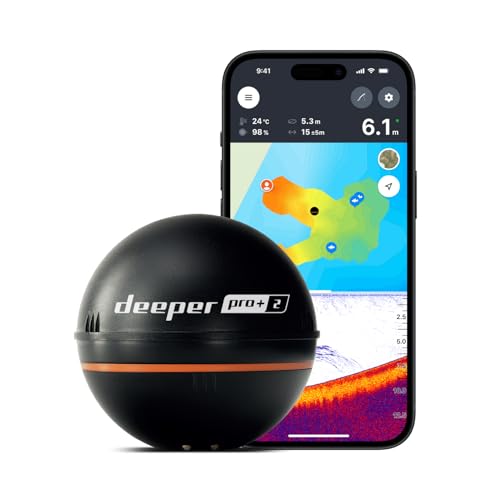
| Portable castable sonar | $150-$400 | Convenient for shore fishing and small craft, but coverage, image detail, and battery life are usually more limited. |
FAQ
Does side imaging show fish better than regular sonar?
Not always. Regular sonar is often better for seeing fish directly beneath the transducer, especially when you are stopped or fishing vertically. Side imaging is better for finding fish near cover and understanding where that cover sits relative to the boat. Use both views when possible.
How fast should I drive for side imaging?
About 2 to 5 miles per hour is a useful starting range. Slower speeds can improve detail, while moderate speeds help you cover water. If the image is stretched, compressed, or difficult to interpret, adjust speed and range before assuming the unit is defective.
Is a 7-inch fish finder large enough for side imaging?
Yes, particularly when you use a full-screen side-imaging view. A 7-inch display is a sensible size for many small and medium boats, but split-screen operation is more cramped. If you frequently run chart, down sonar, and side imaging together, a 9-inch screen is easier to read.
Is side imaging worth paying an extra $100 or $200 for?
Usually, yes, if you fish structure and will spend time learning the feature. The upgrade is less valuable if you rarely move while searching or mainly need depth and navigation. Before buying, budget for a secure transducer mount, an adequate 12-volt battery, and time on the water to learn what the images mean.


Write Your Review
No reviews yet. Be the first to share your experience!