
Key takeaways
- Raised support surface: the model name specifies a 15-inch height figure. Check the current listing to confirm exactly which measurement that refers to — surface height, step-up height, or leg height — because that number determines how easy it is to get on and off.
- Padded, segmented support surface designed for lying supine with the spine lengthened rather than loaded.
- Furniture-style frame: heavier and more stable than a folding inversion table, and correspondingly harder to move or stow.
- No motor required for the basic position; the decompression effect comes from body positioning and gravity rather than a pulling mechanism.
- Weight rating and user height range vary by listing revision — confirm the published figures before ordering.
The best spinal decompression machine for most home users is the Teeter ComforTrak EP-560 inversion table: it fits users from roughly 4 ft 8 in to 6 ft 6 in, carries a 300 lb weight rating, folds down for storage, and comes from a brand that has built inversion equipment for decades. It suits adults who want a repeatable, gravity-based decompression routine at home and who can spare roughly 2 ft × 6 ft of floor plus enough headroom to invert safely. If you would rather have a clinical-style, height-elevated table than an inversion platform, the Sunny Health & Fitness 15″ Height Decompression Reset Table is the premium alternative, and it is the closest thing here to the positioning used in a clinic. If the budget is tight or the room is small, the Everlasting Comfort Lumbar Support Board Back Stretcher costs a fraction as much, needs no assembly and no power, and stores flat against a wall.
Everything in this roundup is a consumer wellness device. None of it is a clinical treatment machine, none of it is a substitute for an evaluation by a physician or physical therapist, and anyone with a spine, disc, joint, bone-density, cardiovascular, or eye condition should clear home traction and inversion with a professional before starting.
Top 3 Picks
Best Overall: TEETER ComforTrak EP-560 Inversion Table
The EP-560 is the most complete home decompression package in this list because it combines a proven inversion platform, a comfortable padded bed, secure ankle retention, and a folding frame that fits a normal bedroom or garage. Its height and weight ranges cover a wider slice of adults than most budget tables, and the brand’s long history in this category means parts and documentation are easier to come by. It is the pick if you want one machine that does the job for years.
Best Budget: Everlasting Comfort Lumbar Support Board Back Stretcher
This is a plastic arch board with adjustable height positions, and it is the lowest-cost way to add a daily spinal lengthening habit at home. It needs no assembly, no power, no partner, and almost no storage space, which makes it the right first purchase for someone who is not sure they will stick with a routine. It is also the only option here that fits comfortably in a studio apartment.
Best Premium: Sunny Health & Fitness 15″ Height Decompression Reset Table
For buyers who want the elevated, supported, clinical-style position rather than a hanging inversion, the Sunny table is the premium choice in this list. It is a piece of furniture as much as a device — heavier, taller, and meant to stay set up in a dedicated space. It suits someone who has already used professional decompression and wants to reproduce the general positioning at home.
Quick Comparison
| Product | Best For | Key Specs | Price Tier |
|---|---|---|---|
| Sunny Health & Fitness 15″ Height Decompression Reset Table | Clinical-style, height-elevated decompression at home | 15″ height figure in model name; raised padded support surface; furniture-style frame; no motor needed for the basic position; confirm current weight rating and height range in the listing | Premium |
| APUOCE Motorized Spinal Decompression Table | Lowest-cost entry into motorized traction | Electric motor drive; segmented padded table; hand control; mains power required; assembly needed; confirm weight rating in the listing | Budget |
| Aplsrhun Spinal Decompression Table, 440LB Capacity | High weight capacity on a tight budget | 440 lb stated capacity; strap-and-pulley style traction table; padded surface; manual operation; folds or breaks down for storage | Budget |
| Everlasting Comfort Lumbar Support Board Back Stretcher | Smallest footprint and lowest cost of entry | Multi-position adjustable arch board; no power, no assembly, no straps; wipes clean; stores flat; supports one user at a time | Budget |
| YOLEO Inversion Table, 265 lbs | Budget inversion-based decompression | 265 lb stated capacity; folding A-frame; padded backrest; adjustable ankle holders; height range published in the listing | Budget |
| TEETER ComforTrak EP-560 Inversion Table | Best overall for most home users | 300 lb capacity; fits roughly 4’8″ to 6’6″; ComforTrak padded bed; Ergo Embrace ankle system; folds to roughly half its deployed length | Premium |
| iSTIM WeTrac Cervical Neck Traction Device | Targeted neck traction without a table | Portable cervical traction unit; hand-pump or mechanical tension control; travel-friendly; no floor space required; one user at a time | Premium |
| Teeter ComforTrak EP-560V Inversion Table | Premium inversion with a different bundled configuration | Same ComforTrak platform class as the EP-560: 300 lb capacity, ~4’8″–6’6″ fit, folding frame, Ergo Embrace ankles; check listing for included accessories | Premium |
| HOTMUZ Spinal Decompression Machine | Mid-range motorized decompression table | Motorized traction unit; segmented padded surface; adjustable traction force; mains power; assembly required; verify weight rating in the listing | Mid-range |
| KOFXVADY Decompression Table Lumbar Traction Device | Mid-range lumbar-focused traction | Lumbar traction platform; adjustable straps or harness; padded contact surface; manual or assisted operation; breaks down for storage | Mid-range |
| Siftary Electric Traction Machine for Neck and Back | One machine covering both cervical and lumbar traction | Electric traction with neck and back attachments; adjustable force and timer; mains power; assembly required; check published weight limits | Mid-range |
| Giztud Electric Spinal Decompression Table | Straightforward mid-range motorized table | Electric motor; segmented padded bed; simple controls; mains power; fixed footprint when assembled; confirm ratings in the listing | Mid-range |
How We Chose
This roundup is built from published product specifications, manufacturer documentation, and category knowledge — not from physical testing. Every entry was screened on five criteria. First, category fit: does the device actually lengthen or unload the spine in a way that matches how it is marketed, whether through inversion, an arched support, or motorized traction? Second, supported body size: a machine that only fits part of the adult population is a poor recommendation, so stated height ranges and weight capacities were checked wherever the listing publishes them. Third, adjustment range: the better devices let you change the angle, force, or position rather than locking you into a single setting. Fourth, footprint and setup: how much floor space it consumes, whether it folds, how long assembly takes, and whether it needs mains power or a second person. Fifth, upgrade path and ownership: whether parts, padding, and documentation are likely to remain available, and whether the device is a reasonable stepping stone to something more capable later.
Where a listing does not publish an exact figure, we describe the product by spec class rather than guessing a number. That is deliberate. Home traction and inversion equipment varies by production run, and the listing is always the authoritative source for the current rating.
1. Sunny Health & Fitness 15″ Height Decompression Reset Table – Best for Clinical-Style Decompression at Home

Sunny Health & Fitness 15" Height Decompression Reset Table for Back Pain
Included for 'Best Spinal Decompression Machines for Home Use' as a relevant option in this category; details come from the product listing.
View on AmazonThe Sunny Health & Fitness 15″ Height Decompression Reset Table is the pick for someone who has used professional decompression equipment, liked the position it put them in, and wants something closer to that experience at home than an inversion table can deliver. Rather than hanging you by the ankles, it raises the body onto an elevated padded support surface where you lie back, let the spine settle into a lengthened position, and control how much of your body weight that surface actually takes. That raised, supported posture is the whole point of the design, and it is the main reason this unit sits in the premium tier.
It suits adults who want a dedicated piece of equipment in a spare room or home gym, who can step up onto a raised platform safely, and who want a routine they can repeat several times a week without a partner’s help. It is a poor fit for anyone with limited mobility, poor balance, or a very small apartment where a fixed elevated table would take over the room.
Key Specs
- Raised support surface: the model name specifies a 15-inch height figure. Check the current listing to confirm exactly which measurement that refers to — surface height, step-up height, or leg height — because that number determines how easy it is to get on and off.
- Padded, segmented support surface designed for lying supine with the spine lengthened rather than loaded.
- Furniture-style frame: heavier and more stable than a folding inversion table, and correspondingly harder to move or stow.
- No motor required for the basic position; the decompression effect comes from body positioning and gravity rather than a pulling mechanism.
- Weight rating and user height range vary by listing revision — confirm the published figures before ordering.
Strengths
The standout strength is positioning. Inversion puts the whole body at an angle and loads the ankles; an elevated reset table keeps you flat and supported while still creating length through the spine. For people who find full inversion uncomfortable, dizzying, or simply unnerving, that difference matters more than any spec sheet figure. The surface is wide enough to feel stable, and because nothing is motorized, there are fewer parts to fail and no power requirement — you can use it anywhere in the house.
Build quality is aimed at long-term ownership rather than portability. That is the right trade if the table lives in one room permanently, and the wrong trade if you move often or need to reclaim the space between sessions.
Pros
- Closest home equivalent to the elevated, supported position used in clinical settings
- No motor, no power cord, no controller to break
- Stable, wide support surface that feels secure to lie back on
- Simple, repeatable routine that does not need a second person
- Build quality oriented toward years of use rather than occasional use
Cons
- Premium tier pricing, and the highest of any single unit in this roundup
- Large, heavy, and not designed to be folded away between sessions
- Getting on and off a raised surface is difficult for anyone with balance or mobility limits
- No published motorized traction force, so the decompression effect depends entirely on positioning
- Overkill for someone who only wants a five-minute daily stretch
How it compares: against the TEETER ComforTrak EP-560, the Sunny table trades inversion for supported elevation. If you are comfortable hanging at an angle and want a machine that folds away, the Teeter wins on space and adjustability. If hanging makes you uneasy or you specifically want the clinical-style position, the Sunny table is the better match. Against the mid-range HOTMUZ motorized table, the Sunny unit gives up powered traction force but gains simplicity and durability — there is simply less to go wrong.
2. APUOCE Motorized Spinal Decompression Table – Best for Affordable Motorized Traction

APUOCE Motorized Spinal Decompression Table - Electric Back Traction Machine for Sciatica & Herniated Disc Relief, Professional Lumbar Stretching Device for Home Physical Therapy & Pain Management
Included for 'Best Spinal Decompression Machines for Home Use' as a relevant option in this category; details come from the product listing.
View on AmazonThe APUOCE Motorized Spinal Decompression Table is the budget route into powered traction. Instead of relying on gravity or your own body position, it uses an electric motor to apply a controlled pull along the spine while you lie on a segmented padded table. That is a meaningfully different experience from inversion or an arch board: the machine does the work, the force is adjustable, and the session is more passive.
It suits buyers who want the feel of a traction table without paying mid-range or premium prices, who have a spare room or garage corner for a fixed piece of equipment, and who are comfortable assembling a motorized unit. It is not the right choice for someone who wants something they can fold into a closet, and it is not a substitute for a clinical traction program prescribed by a professional.
Key Specs
- Electric motor drive with a hand control for adjusting traction force and session timing
- Segmented padded table surface that separates into sections so the lower body can be drawn away from the upper body
- Mains power required — placement is limited by outlet access
- Assembly needed out of the box; expect a multi-step build rather than a five-minute setup
- Weight rating and user height range are published per listing — verify before ordering
Strengths
The core appeal is price-to-function. Motorized traction tables generally sit in the mid-range and premium tiers, so a budget-priced motorized unit opens the category to buyers who would otherwise be limited to an arch board or a budget inversion table. Adjustable force is the feature that matters most here: it lets you start light and increase tension gradually, which is the sensible way to introduce any traction routine.
The segmented surface is also genuinely useful. Separating the table into sections lets the lower body move independently, which is the mechanism by which traction lengthens the spine rather than simply stretching the whole body at an angle. For a budget unit, that is the right feature to prioritize.
Pros
- Motorized traction at the lowest price tier in this roundup
- Adjustable force lets you build up gradually
- Segmented table design mirrors the layout of more expensive traction tables
- Passive session — no need to hold a position or hang by the ankles
- Hand control keeps adjustment within reach while lying down
Cons
- Requires mains power and a permanent-ish footprint
- Assembly is more involved than any non-motorized option here
- Budget-tier motors and controllers are the first thing to wear or fail
- Documentation and spare-part availability are less predictable than with established brands
- Published weight and height limits may be narrower than premium tables
How it compares: against the Aplsrhun table, the APUOCE adds a motor but the Aplsrhun publishes a 440 lb capacity, so if body size is the deciding factor the Aplsrhun is the safer pick. Against the mid-range HOTMUZ, the APUOCE saves money but gives up the more refined controls and heavier frame you typically get one tier up. If you are unsure whether you will use traction consistently, start here and upgrade later rather than committing to a mid-range table on day one.
3. Aplsrhun Spinal Decompression Table, 440LB Capacity – Best for Higher Body Weight on a Budget
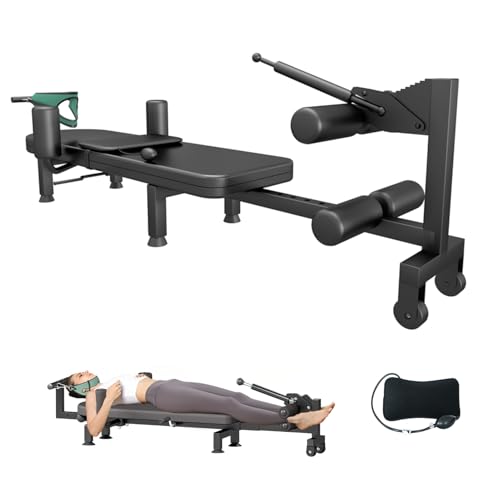
Aplsrhun Spinal Decompression Table for Back Pain Relief, 440LB Capacity
Included for 'Best Spinal Decompression Machines for Home Use' because the listing specifies 440LB Capacity, details this guide uses to compare options.
View on AmazonThe Aplsrhun Spinal Decompression Table leads with its capacity figure: a stated 440 lb rating, which is higher than any other product in this roundup and well above what most budget inversion tables and stretchers support. That single number changes who can buy it. If you have been filtering out home decompression equipment because every budget listing tops out well below your weight, this is the entry that stays on the list.
It suits larger adults who want a strap-and-pulley style traction table without moving into mid-range pricing, and who have room to leave a full-length table set up or partially assembled. It is a manual, user-driven device, so it also suits people who prefer to control tension by hand rather than through a motor and controller.
Key Specs
- 440 lb stated weight capacity — the highest figure in this comparison
- Strap-and-pulley traction design with a padded support surface
- Manual operation — no motor, no power cord, no controller
- Breaks down or folds for storage, though it remains a full-length piece of equipment
- User height range is published per listing; confirm it fits your frame before ordering
Strengths
Capacity is the headline, but the manual design is a real second advantage. With no motor and no electronics, there is very little to break, and nothing depends on a power outlet. Tension is applied by straps and body position, which means the machine cannot out-pull you — you feel exactly what is happening and can ease off immediately. For anyone nervous about powered traction, that is a meaningful comfort.
It also sidesteps the most common failure point in budget motorized tables. Motors, controllers, and wiring are what tend to fail first on inexpensive powered units; a purely mechanical table has none of those. If your priority is a device that still works in five years with minimal fuss, the simplicity is an asset rather than a limitation.
Pros
- 440 lb stated capacity — the highest in this roundup
- No motor or electronics to fail
- Manual tension gives immediate, intuitive feedback
- Budget-tier price for a full-length traction table
- Works anywhere, no outlet required
Cons
- Manual tension is less repeatable than a motorized, dialed-in force
- Still a large object to store even when broken down
- Assembly and adjustment take longer than a simple arch board
- Fewer fine-grained settings than a powered traction table
- Less brand documentation than premium-tier alternatives
How it compares: against the APUOCE motorized table, the Aplsrhun trades powered adjustment for a much higher weight capacity and mechanical simplicity. Choose the Aplsrhun if capacity or durability is the priority; choose the APUOCE if you want a motor to hold tension for you. Against the YOLEO inversion table, the Aplsrhun supports considerably more weight and keeps you lying flat rather than hanging at an angle — but the YOLEO folds smaller and is easier to move out of the way.
4. Everlasting Comfort Lumbar Support Board Back Stretcher – Best for Small Spaces and First-Time Buyers
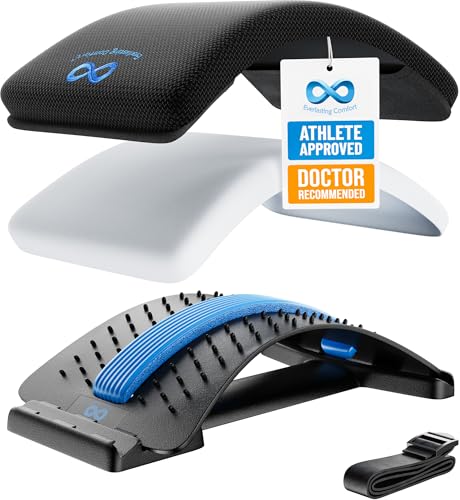
Everlasting Comfort Lumbar Support Board Back Stretcher for Lower Pain Relief - Adjustable Spine Decompression with 88 Acupressure Nodes - Back Cracking Device with Chair Strap for Posture Correction
Included for 'Best Spinal Decompression Machines for Home Use' because the listing specifies Adjustable Spine Decompression with 88 Acupressure Nodes and Back Cracking Device with Chair Strap for Posture Correction, details this guide uses to compare options.
View on AmazonThe Everlasting Comfort Lumbar Support Board Back Stretcher is the simplest thing in this roundup and, for a lot of people, the right place to start. It is an arched board with adjustable height positions that you lie back over, letting gravity create a gentle extension through the lower back. There is no motor, no strap, no assembly, no power, and no second person required.
It suits buyers in apartments and shared homes, anyone who wants to test whether a daily spinal routine sticks before spending more, and people who want something they can use on the floor next to a bed and then slide behind a door. It is not a substitute for a traction table, and it will not suit anyone who cannot comfortably get down to and up from floor level.
Key Specs
- Multi-position adjustable arch — the height setting changes how much extension you get
- No power, no assembly, no straps
- Wipe-clean surface that resists sweat and dust
- Stores flat — roughly the footprint of a large cutting board
- Single-user, floor-level device; a mat underneath is a sensible addition
Strengths
The strongest argument for this board is behavioral, not mechanical. The device people actually use beats the better device that stays folded in a closet. Because it takes seconds to set up and seconds to put away, it fits into a morning or evening routine in a way a full traction table rarely does. The adjustable arch also lets you start at a shallow setting and work up over weeks rather than committing to one fixed angle.
Cost is the other advantage. At the budget tier, this is a low-risk purchase — if the routine does not stick, you have lost very little, and if it does, you can graduate to an inversion table or traction table with a clear sense of what you actually want from it.
Pros
- Lowest cost and smallest footprint in this roundup
- Zero setup — usable the moment it arrives
- Adjustable arch lets you progress gradually
- No power, no motor, nothing to fail
- Easy to store and easy to travel with
Cons
- Targets the lower back only — no cervical or full-spine effect
- Floor-level use is awkward for anyone with limited mobility
- Extension comes from body weight over an arch, not from true traction
- Plastic construction has a finite lifespan under repeated loading
- No way to measure or repeat a precise force setting
How it compares: against the YOLEO inversion table, the Everlasting Comfort board is dramatically cheaper and smaller but far less capable — it works the lower back over an arch rather than unloading the whole spine at an angle. If you have already tried an arch board and found it too mild, the YOLEO is the logical next step up. If you have never used either, buy the board first.
5. YOLEO Inversion Table, 265 lbs – Best for Budget Full-Body Inversion

YOLEO Inversion Table Decompression Table for Back Pain Relief 265 lbs
Included for 'Best Spinal Decompression Machines for Home Use' as a relevant option in this category; details come from the product listing.
View on AmazonThe YOLEO Inversion Table is the cheapest way in this roundup to get true full-body inversion. It is a folding A-frame table with a padded backrest and adjustable ankle holders, and it rotates you to a controlled angle so gravity lengthens the spine rather than compressing it. That is a different mechanism from an arch board or a traction table, and for many people it is the one that feels most effective.
It suits adults within its stated 265 lb capacity who want inversion without paying premium prices, and who have a spot where the table can be deployed with clearance behind and above it. It does not suit anyone outside that weight range — and it does not suit anyone with balance problems, uncontrolled blood pressure, or any condition where inversion is contraindicated.
Key Specs
- 265 lb stated weight capacity
- Folding A-frame that collapses for storage between sessions
- Padded backrest with adjustable ankle holders
- Manual rotation controlled by arm movement and body position
- User height range is published in the listing — check it, because inversion tables are height-sensitive
Strengths
Inversion is the most direct gravity-based decompression available at home, and this is the least expensive way to try it. The folding frame is a genuine practical advantage over a fixed table: you can deploy it, use it, and fold it against a wall in the same session. Setup is straightforward compared with a motorized traction table, and there is nothing electronic to fail.
Ankle retention is the part of an inversion table that determines whether the experience is comfortable or miserable, and a padded, adjustable holder — which this table has — is the feature to look for at this price. The padded backrest also matters more than buyers expect, since you are lying on it at an angle rather than flat.
Pros
- Lowest-cost route to genuine full-body inversion
- Folds for storage — practical in a garage or spare room
- No power, no motor, no electronics
- Adjustable ankle holders improve comfort at this price point
- Simple, well-understood mechanism with an established safety routine
Cons
- 265 lb capacity is the second-lowest in this roundup
- Budget frame and pivot hardware are the parts most likely to develop play over time
- Inversion is contraindicated for several health conditions and needs professional clearance
- Requires clearance above and behind the table to rotate safely
- Less refined padding and ankle retention than premium inversion tables
How it compares: against the TEETER ComforTrak EP-560, the YOLEO saves a great deal of money but gives up capacity, padding quality, and pivot refinement. If you weigh under the YOLEO’s stated limit and only invert occasionally, the savings are real. If you plan to invert four or five times a week for years, the Teeter’s heavier hardware and higher rating are worth the step up. Against the Everlasting Comfort arch board, the YOLEO is a much more capable device — but it is also much larger and much less likely to be used on a whim.
6. TEETER ComforTrak EP-560 Inversion Table – Best Overall for Most Home Users
The TEETER ComforTrak EP-560 is the best overall home decompression machine in this roundup. It pairs a 300 lb weight rating with a user height range of roughly 4 ft 8 in to 6 ft 6 in, which covers a larger share of adults than almost anything else here, and it does so on a platform that folds to roughly half its deployed length. Teeter has specialized in inversion equipment for decades, and that shows in the details that matter: the padded bed, the ankle retention system, and the pivot mechanism.
It suits adults who want one machine to serve as their long-term home decompression tool, who can dedicate a corner of a room or a garage bay to it, and who are willing to follow a proper inversion routine rather than improvising. It is more machine than a casual user needs, and it is not the right pick for anyone outside its height or weight ranges, or for anyone whose health situation rules out inversion.
Key Specs
- 300 lb weight capacity
- Fits users approximately 4’8″ to 6’6″
- ComforTrak padded bed — a full-length cushioned surface rather than a bare frame with a backrest
- Ergo Embrace ankle retention — the system that holds your feet while you rotate
- Folding frame that reduces to roughly half its deployed footprint for storage
- No power required; rotation is controlled by arm and body movement
Strengths
The padded ComforTrak bed is the feature that separates this table from budget alternatives. Inversion means lying on a surface at an angle for several minutes at a time; a thin backrest becomes uncomfortable quickly, and discomfort is what kills routines. A full-length cushioned bed also lets you do more than hang — you can add gentle stretching and mobility work while inverted, which is how inversion tables earn their place in a home.
The ankle system is the second differentiator. Ankle retention is the single biggest comfort complaint with cheap inversion tables, and a well-designed holder with proper padding and adjustability turns a session from an ordeal into something tolerable. Combine that with the wider height range and the higher weight rating, and the EP-560 is the machine most likely to still be in use two years after purchase.
Pros
- 300 lb capacity and roughly 4’8″–6’6″ height range cover most adults
- Full-length padded ComforTrak bed for longer, more comfortable sessions
- Ergo Embrace ankle system addresses the most common inversion complaint
- Folds to about half its deployed length for storage
- Long-established brand with better documentation and parts availability than budget rivals
Cons
- Premium-tier price
- Heavier than budget folding tables, so moving it is a two-person job
- Still requires ceiling and rear clearance to rotate safely
- Inversion is contraindicated for several medical conditions
- More machine than someone who only wants a five-minute daily lower-back stretch
How it compares: against the Teeter ComforTrak EP-560V, the two share the same ComforTrak platform class, capacity, and fit range — the difference comes down to the specific configuration and bundled accessories in each listing, so compare those directly rather than assuming one is mechanically superior. Against the Sunny Health & Fitness 15″ reset table, the EP-560 gives you true inversion and a foldable frame; the Sunny gives you a supported, elevated position without hanging. Against the YOLEO, the EP-560 costs more but offers a higher capacity, better padding, and a longer service life.
7. iSTIM WeTrac Cervical Neck Traction Device – Best for Targeted Neck Traction

iSTIM WeTrac Cervical Neck Traction Device, Relaxer and Stretcher, Pain Relief for Spinal Decompression, Relieving Pinched Nerves, and Cervical Pain, Home Use, with Travel Bag
Included for 'Best Spinal Decompression Machines for Home Use' because the listing specifies Relaxer and Stretcher and Pain Relief for Spinal Decompression, details this guide uses to compare options.
View on AmazonThe iSTIM WeTrac Cervical Neck Traction Device is the odd one out in this roundup, and that is exactly why it belongs. Every other product here works on the lower back or the whole spine. Neck traction is a separate problem, and a full inversion table or lumbar table will not address it. The WeTrac is a portable cervical traction unit designed to apply controlled tension through the neck while you sit or lie comfortably.
It suits people whose primary complaint is in the cervical spine rather than the lower back, anyone who wants something they can use at a desk or while travelling, and buyers who already own a back-focused device and want to cover the other end of the spine. It is not a whole-body solution and it is not a replacement for professional evaluation of neck pain.
Key Specs
- Portable cervical traction device — no table or frame required
- Adjustable tension applied through the neck rather than the lower back
- Compact and travel-friendly, unlike every other product in this roundup
- Single-user, seated or reclined use
- Premium tier — cervical-specific devices carry a price premium over generic stretchers
Strengths
Targeting is the whole value proposition. Cervical traction requires a different direction of pull and a much lower force than lumbar traction, and using a lumbar device to try to address neck tension simply does not work. If your neck is the problem, this is the only product in this list aimed at it, which makes the decision simple.
Portability is the second advantage. A device that fits in a bag means you can keep a routine going while travelling, which is often when neck tension is worst. The premium price reflects the specialized design and the smaller market for cervical devices compared with generic back stretchers.
Pros
- The only cervical-specific device in this roundup
- Compact and portable — usable at home, at a desk, or on a trip
- Adjustable tension lets you start gently
- No floor space or clearance required
- Complements a back-focused machine rather than duplicating it
Cons
- Premium-tier price for a small, single-purpose device
- Does nothing for the lower back
- Neck traction carries its own contraindications and should be cleared professionally
- Single-user, one body region at a time
- Less mechanically substantial than a table, so it feels expensive relative to its size
How it compares: against the Siftary Electric Traction Machine, which is built to handle both neck and back, the WeTrac is more portable and more focused but cannot touch the lumbar spine. If you need one device for the whole spine and have the floor space, the Siftary is the broader tool. If your problem is specifically cervical and you want something you can use anywhere, the WeTrac is the better match — and the two are complementary rather than competing purchases.
8. Teeter ComforTrak EP-560V Inversion Table – Best for a Premium Inversion Setup With a Different Bundle

Teeter ComforTrak EP-560V Inversion Table, Decompression Surface for Full-Body Stretch, Ergo Embrace Ankle Supports, Integrated Accessories, UL Safety Certified, Heavy-Duty 300 lb Capacity (EP-560V)
Included for 'Best Spinal Decompression Machines for Home Use' because the listing specifies Decompression Surface for Full-Body Stretch and Ergo Embrace Ankle Supports, details this guide uses to compare options.
View on AmazonThe Teeter ComforTrak EP-560V Inversion Table is a close sibling of the EP-560 rather than a different machine. It shares the ComforTrak platform class, the padded full-length bed, the Ergo Embrace ankle retention system, and the same general capacity and fit range — 300 lb and roughly 4 ft 8 in to 6 ft 6 in. What differs is the configuration and the accessories bundled into the specific listing.
It suits the same buyer as the EP-560: an adult who wants a durable, comfortable, full-featured inversion table for long-term home use. The reason to pick the V over the base model is that the bundle may include items you would otherwise buy separately — an accessory kit, a mat, or a specific attachment — which can change the value calculation even though the core machine is comparable.
Key Specs
- 300 lb weight capacity, in the same class as the EP-560
- Fits users approximately 4’8″ to 6’6″
- ComforTrak padded bed for comfortable multi-minute sessions
- Ergo Embrace ankle retention
- Folding frame for storage between sessions
- Bundle contents differ from the base EP-560 — check what is included before comparing prices
Strengths
Everything that makes the EP-560 the best overall pick applies here: the padding, the ankle system, the height range, and the folding frame. The difference is the bundle. If the V configuration includes accessories you would buy anyway — a floor mat, a stretching accessory, or an additional comfort item — the effective cost can land below the base model even if the headline price is higher.
It also means you are buying into the same parts ecosystem. Ankle pads, pivot hardware, and replacement components are shared across the ComforTrak line, so ownership support does not change depending on which configuration you pick.
Pros
- Same proven ComforTrak platform as the best overall pick
- 300 lb capacity and a broad height range
- Padded full-length bed for comfortable longer sessions
- Ergo Embrace ankle system reduces the most common discomfort complaint
- Bundled accessories can improve the effective value if they match what you need
Cons
- Premium-tier price
- Higher headline cost than the base model if the bundle includes things you will not use
- Heavy and requires clearance to rotate
- Identical mechanical capability to the EP-560, so the premium is for accessories, not performance
- Inversion still carries contraindications that require professional clearance
How it compares: against the EP-560, the honest answer is that the two are mechanically equivalent in the ways that matter for decompression — capacity, fit range, bed, and ankle retention. Compare the included accessories line by line and buy whichever bundle gives you more of what you will actually use. Against the YOLEO inversion table, the Teeter V is a significant step up in padding, hardware, and capacity; against the Sunny Health & Fitness reset table, it is a different mechanism entirely, so choose based on whether you want to invert or to lie supported at elevation.
9. HOTMUZ Spinal Decompression Machine – Best for Mid-Range Motorized Decompression

Spinal Decompression Machine Decompression Table for Back Pain Relief
Included for 'Best Spinal Decompression Machines for Home Use' as a relevant option in this category; details come from the product listing.
View on AmazonThe HOTMUZ Spinal Decompression Machine is the middle of the motorized market: more refined than a budget electric table, considerably less expensive than a premium inversion or reset platform. It is a motorized traction unit with a segmented padded surface, an adjustable traction force, and controls that let you set the pull and let the machine hold it for the duration of a session.
It suits buyers who want passive, powered traction rather than gravity-based inversion, who have a dedicated space for a full-length table, and who are comfortable with a mains-powered device that needs assembly. It is not for anyone who wants a device they can fold away, and it is not a clinical traction unit — the force levels and the precision of control are in a different class.
Key Specs
- Motorized traction with adjustable force
- Segmented padded table surface so the lower body can be drawn independently
- Mains power required — plan the outlet before you plan the room
- Assembly required; expect a substantial build with multiple components
- Weight rating and user height range published per listing — verify before purchase
Strengths
Mid-range is where motorized tables stop feeling like a compromise. The frame is typically heavier and more stable than budget units, the padding holds up better under repeated sessions, and the controls offer finer adjustment — which matters, because traction is something you should increase gradually rather than jump into at full force. A machine that lets you dial in small increments is safer and easier to live with.
The segmented surface is the mechanism that makes motorized traction different from a stretch. By separating the table into sections and moving the lower portion away, the machine creates length through the lumbar spine rather than simply pulling the whole body. That is the feature to insist on when comparing tables at this price.
Pros
- Motorized, adjustable traction — passive sessions with no effort held by you
- Segmented table design mirrors higher-tier traction tables
- Heavier, more stable frame than budget motorized units
- Finer force adjustment than entry-level electric tables
- Middle-of-market pricing with a clear upgrade ceiling above it
Cons
- Requires mains power and a fixed footprint
- Assembly is a project, not a five-minute task
- Still a consumer device, not a clinical traction machine
- Motor and controller remain the most likely long-term failure points
- Documentation and spare-part support are less predictable than with established inversion brands
How it compares: against the APUOCE budget motorized table, the HOTMUZ costs more but typically delivers a sturdier frame and more precise adjustment — worth the difference if you plan to use it regularly. Against the KOFXVADY lumbar traction device, the HOTMUZ leans toward full-table motorized traction while the KOFXVADY emphasizes lumbar-focused, harness-based positioning. Against the Giztud electric table, both are mid-range motorized units; compare the published weight ratings and adjustment ranges directly.
10. KOFXVADY Decompression Table Lumbar Traction Device – Best for Lumbar-Focused Traction
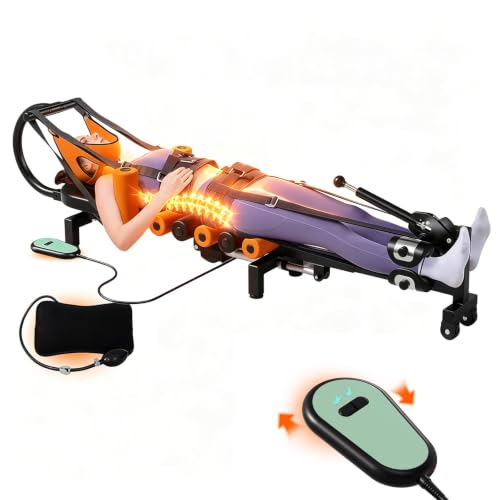
Decompression Table Lumba Traction Device Back Spinal Stretcher Machine
Included for 'Best Spinal Decompression Machines for Home Use' as a relevant option in this category; details come from the product listing.
View on AmazonThe KOFXVADY Decompression Table Lumbar Traction Device is aimed squarely at the lower back. It is a traction platform built around a lumbar harness or strap arrangement and a padded contact surface, which means the pull is concentrated where the lumbar spine is rather than distributed across the whole body. That focus is the reason to choose it over a general-purpose table.
It suits adults whose primary issue is in the lower back, who want to control tension by hand or with light assistance rather than through a motor, and who have a space where the table can live. It is less suited to anyone who wants cervical coverage or a fully passive motorized session.
Key Specs
- Lumbar-focused traction platform with a padded support surface
- Adjustable straps or harness to position and hold the pull
- Manual or lightly assisted operation — no motor to adjust or fail
- Breaks down for storage, though it is still a full-length device
- Weight and height limits published per listing — confirm before ordering
Strengths
Focus is the advantage. A general-purpose table has to accommodate a wide range of users and body positions, which often means the lumbar experience is diluted. A lumbar-specific device is shaped around one job, and that usually translates into better contact and more effective positioning for the lower back.
The manual mechanism is the second benefit. There is no motor, no controller, and no power dependency — tension comes from straps and body position, so you feel exactly how much force is being applied and can back off instantly. For anyone who wants to introduce traction cautiously, that direct feedback is genuinely useful, and it removes the most common long-term failure point on powered tables.
Pros
- Lumbar-specific design rather than a compromise across the whole spine
- No motor or electronics to fail
- Manual tension gives immediate feedback
- Mid-range price for a dedicated traction platform
- No power outlet required
Cons
- No cervical capability
- Manual tension is less repeatable than a dialed-in motorized force
- Still requires significant floor space
- Assembly and adjustment take time
- Less brand documentation than premium alternatives
How it compares: against the HOTMUZ motorized table, the KOFXVADY trades powered, repeatable force for a more focused lumbar design and a simpler mechanism. If you want the machine to hold tension so you can relax completely, choose the HOTMUZ. If you want direct control and a lower chance of mechanical failure, choose the KOFXVADY. Against the Siftary, which covers neck and back, the KOFXVADY is narrower but likely better at the one job it is built for.
11. Siftary Electric Traction Machine for Neck and Back – Best for Combined Cervical and Lumbar Traction

Electric Traction Machine for Neck and Back, Spinal Cervical Decompression Traction Bed for Spine Stretching, Lumbar Traction Decompression Table for Tension Relief & Body Aches Pains
Included for 'Best Spinal Decompression Machines for Home Use' as a relevant option in this category; details come from the product listing.
View on AmazonThe Siftary Electric Traction Machine for Neck and Back is the only powered device in this roundup that covers both ends of the spine in one unit. It is an electric traction bed with attachments for cervical and lumbar use, adjustable force, and a timer, so you can run a neck session one day and a lower-back session the next without buying two machines.
It suits buyers who have symptoms in more than one region, who want powered and repeatable tension rather than manual straps, and who have room for a full-length table plus mains power nearby. It is not for anyone who wants portability, and it is not a clinical traction unit — the precision and the monitoring available in a clinic are not replicated here.
Key Specs
- Electric traction with both neck and back attachments
- Adjustable force and session timer
- Mains power required
- Assembly required — a multi-component build
- Published weight limits and height range vary by listing; check before ordering
Strengths
Coverage is the reason to buy this machine. Cervical and lumbar traction need different directions of pull and very different force levels, and having one device that does both — with the ability to switch between them — saves both money and floor space compared with buying a lumbar table plus a separate neck device. For households where two people have different problem areas, that flexibility is even more valuable.
The timer is an underrated feature. Traction sessions should be time-limited rather than open-ended, and a built-in timer makes it easy to follow a consistent protocol instead of guessing. Adjustable force matters for the same reason: you can start light and progress, which is the sensible way to introduce any traction routine.
Pros
- The only powered device here covering both cervical and lumbar traction
- Adjustable force with a built-in session timer
- One machine and one footprint instead of two
- Passive sessions — no effort required to hold tension
- Mid-range pricing for dual-region capability
Cons
- Requires mains power and permanent floor space
- Assembly is more involved than any non-motorized option
- Cervical attachments on a table are generally less targeted than a dedicated neck device
- Motor and controller are the most likely failure points
- Consumer-grade force control, not clinical precision
How it compares: against the iSTIM WeTrac, the Siftary covers more of the spine but cannot travel and does not focus as tightly on the neck. If neck tension is your only issue, the WeTrac is the sharper tool; if you need both regions and have the space, the Siftary replaces two purchases with one. Against the Giztud electric table, the Siftary’s dual-region attachments are the deciding difference — the Giztud is a more straightforward back-focused machine.
12. Giztud Electric Spinal Decompression Table – Best for Simple Mid-Range Motorized Use

Electric Spinal Decompression Table
Included for 'Best Spinal Decompression Machines for Home Use' as a relevant option in this category; details come from the product listing.
View on AmazonThe Giztud Electric Spinal Decompression Table is a straightforward mid-range motorized unit: an electric motor, a segmented padded bed, and simple controls. It does not try to cover the neck, it does not fold away, and it does not pretend to be a clinical device. It applies adjustable traction to the spine while you lie back and let the machine work.
It suits buyers who have already decided they want powered traction, who want a back-focused machine without paying for cervical attachments they will not use, and who have a dedicated spot for a full-length table with an outlet nearby. It is not for anyone who needs portability or who wants to store equipment between sessions.
Key Specs
- Electric motor with adjustable traction force
- Segmented padded bed for independent lower-body movement
- Simple controls — fewer modes and attachments than dual-region machines
- Mains power required
- Fixed footprint once assembled; verify published weight and height limits in the listing




Write Your Review
No reviews yet. Be the first to share your experience!