
Key takeaways
- Best Livestock Scales for Farms and Ranches The best livestock scale for most farms is a low-profile, non-slip platform scale with a capacity matched to the heaviest animal, enough deck space for a stable stance, and load cells and a…
Best Livestock Scales for Farms and Ranches
The best livestock scale for most farms is a low-profile, non-slip platform scale with a capacity matched to the heaviest animal, enough deck space for a stable stance, and load cells and a readout protected for the weighing location. For sheep and goats, a compact 500- to 1,000-pound scale is usually easier to handle; for cattle, choose a livestock platform or alley system rated for the animal’s full weight, with a sturdy restraint option if precise, repeatable readings matter.
There is no one best setup for every operation. A portable platform makes sense for occasional checks in different pens, while a fixed alley scale is better for frequent cattle weighing. Compare the complete system—not just the platform—including indicator, cables, gates, ramps, and environmental protection.
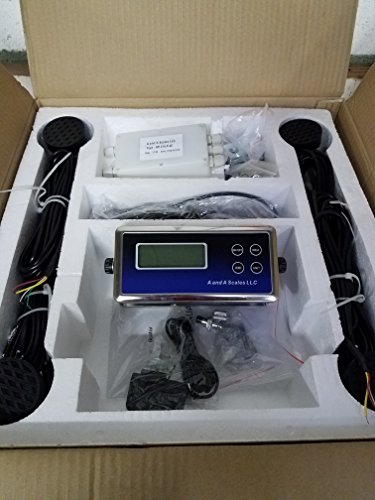
FSK Livestock Scale Kit Build Your Own Scale at a Fraction of the Price
Included for 'Best Livestock Scales for Farms and Ranches' as a relevant option in this category; details come from the product listing.
View on Amazon
Togarhow 1100Lbs x 0.2Lbs Digital Livestock Scale Stainless Steel Non-Slip Platform Scale Electronic Heavy Duty Postal Shipping Scale for Large Pet Dog Goat Pig Cattle Sheep
Included for 'Best Livestock Scales for Farms and Ranches' as a relevant option in this category; details come from the product listing.
View on AmazonLivestock scale comparison by use
The figures below are practical selection targets, not specifications for one particular model. Verify the rated capacity, usable deck dimensions, resolution, and environmental ratings for the complete scale package before buying. Brands such as Tru-Test, Gallagher, and Digi-Star offer livestock weighing equipment; available configurations and specifications vary.
| Use case | Capacity target | Useful platform size | Resolution to look for | Restraint and portability |
|---|---|---|---|---|
| Sheep and goats | 500–1,000 lb | About 24 × 36 in | 0.2–1 lb | Raised sides or a small crate; usually portable |
| Calves and small pigs | 1,000–2,000 lb | About 30 × 48 in | 0.5–2 lb | Guard rails or a crate; portable if the frame is manageable |
| Market hogs or yearlings | 2,000–3,000 lb | About 36 × 60 in | 1–2 lb | Side panels and secure entry; often semi-permanent |
| Adult cattle | 4,000–6,000 lb or more | About 30–36 × 84–96 in | 2–5 lb | Non-slip deck, gates or alley integration; generally fixed |
Deck dimensions are approximate planning ranges. An animal needs room to stand without putting a hoof on an edge or gate. For cattle, match the platform length to the approach and restraint system, not just the animal’s body length.
Choose by where and how you weigh
For occasional weighing in several pens
Choose a compact platform or crate scale with handles, a separate indicator, and removable or fold-down ramps if available. Check the assembled weight: a heavy-duty cattle platform may be portable in principle but too awkward to move safely without a cart or loader. Before purchase, confirm that the indicator can be mounted where it won’t be kicked, crushed, or sprayed during washing.
For frequent cattle handling
A fixed platform integrated into an existing alley or chute is usually more efficient than repeatedly moving a scale. Look for a stiff frame, protected cables, secure gates, and a surface that remains grippy when dirty or wet. A capacity cushion helps accommodate animal movement and occasional impact, but it does not compensate for an undersized or poorly supported platform.
For pigs, sheep, and goats
These animals often shift, turn, or crowd together. A crate with a gate can make readings more consistent and reduce escapes, but it adds cleaning and handling time. If the goal is only to track approximate growth, a platform with suitable side rails may be quicker; if animals are being sorted by weight, a stable crate and reliable repeatability are more valuable.
For outdoor or wash-down locations
Ask for the ingress-protection rating of the load cells, connectors, indicator, and junction box—not just a claim that the platform is “weather resistant.” Rain, pressure washing, manure, and condensation can reach different parts of a system. Use sealed connectors, keep the indicator sheltered where possible, and follow the manufacturer’s cleaning instructions. A stainless or coated frame resists corrosion better than unprotected steel, but neither material eliminates the need to rinse off corrosive residue and dry the equipment.
Capacity, accuracy, and restraint: what the numbers mean
Set capacity above the heaviest animal you expect to weigh. As a planning check, allow roughly 20–30% headroom over that weight, then confirm the manufacturer’s rated capacity and overload guidance. A 1,500-pound animal, for example, points to a scale rated around 1,800–2,000 pounds or higher—not a 1,500-pound unit that may be pushed to its limit by movement or impact.
Do not confuse display increments with accuracy. A scale that shows 0.5-pound steps is not necessarily accurate to half a pound across its full capacity. Ask about stated accuracy, calibration procedure, and performance under off-center loading. Position all four hooves on the deck, keep the platform level, and use the indicator’s animal-weighing or motion-filter setting if supported. Filtering can steady a changing display, but it may take longer to settle and cannot correct a platform that rocks or binds against its frame.
Restraint improves repeatability when it keeps the animal centered without forcing it to struggle. Choose smooth, secure gates and avoid sharp edges or gaps that could trap a hoof. Follow safe handling practices and get help with large or distressed animals; weighing equipment is not a substitute for appropriate livestock-handling facilities.
Decision matrix: match the scale to the operation
| Situation | Best fit | Trade-off to expect |
|---|---|---|
| Low budget, a few small animals, infrequent checks | Basic portable platform sized for the species | More manual positioning; fewer restraint features |
| New operator weighing sheep, goats, or calves | Platform with side rails or a crate and clear indicator controls | Higher cost and more surfaces to clean |
| Limited storage or multiple weighing locations | Compact platform with manageable assembled weight and a separate indicator | May need a cart or second person to move safely |
| Frequent cattle weighing in one handling area | Fixed, alley-compatible platform with gates and protected wiring | Installation and site preparation add cost |
| Wet, muddy, or wash-down environment | System with documented environmental protection for all electronics | Higher initial price; seals and connectors still need inspection |
Ownership details that affect long-term value
Load cells, cables, connectors, and the platform’s moving or flexing parts deserve regular inspection. Cables are vulnerable to hooves, rodents, and gate pinch points; keep them routed through protected channels. Mud and packed manure can bridge gaps beneath a platform, causing it to bind and produce unreliable readings. After cleaning, check that the deck moves freely and that ramps or gates are not touching it in a way that transfers weight around the load cells.
Place the scale on a firm, level surface. A platform that rocks or sits partly on soft ground can give inconsistent results even if its electronics are sound. Keep the indicator dry, replace damaged seals or cables promptly, and arrange calibration checks according to the manufacturer’s schedule and the importance of the measurements. For sale, regulated transactions, or records with legal or financial consequences, confirm local requirements for approved weighing equipment and calibration.
When comparing prices, include the indicator, ramps, gates or crate, installation, and any required calibration. A bare platform may look like a bargain but still need costly accessories to work safely in your handling area. For occasional use, portability may be worth more than automation; for repeated sorting or herd records, durability, repeatable animal positioning, and service support often matter more than the smallest display increment.

Write Your Review
No reviews yet. Be the first to share your experience!