
Key takeaways
- Action: Low action can make fast runs and barre chords easier, but aggressive right-hand playing may cause more buzz. Ask a seller or technician to check the setup rather than assuming the lowest possible strings are ideal.
- Weight: A lighter body can be more comfortable for long sessions and often suits the quick feel players seek in a blanca. Balance and body shape matter too; test the guitar in your usual playing position.
- Golpeador: The clear or translucent plate protects the soundboard from golpe taps. Check that it covers the area your fingers strike and has no lifting edges. If the guitar lacks one, have a correctly fitted flamenco protector installed; careless application can damage the finish.
- Top and finish: A solid top can respond more dynamically than a laminate top, but it is also more sensitive to humidity changes and knocks. Store the guitar in a case when practical and avoid leaving it in a hot car.
The best flamenco guitars depend on your playing style and budget
For a first flamenco guitar, choose a light, comfortable nylon-string model with a factory-fitted golpeador; for frequent rasgueado and golpe, prioritize a responsive spruce top and sturdy protection; and for a more rounded, traditional voice, consider a cedar top or an experienced luthier’s instrument. Among established options, the Yamaha CG172SF is a practical entry-level flamenco pick, the Cordoba F7 is a step-up choice, and the Cordoba GK Studio is a versatile option for players who need a pickup. Prices vary by seller and region, so treat the ranges below as broad market guidance rather than quotes.
Flamenco guitars are typically lighter and set up with lower action than classical guitars, helping notes respond quickly and making percussive techniques easier. That same low setup can produce more fret buzz if you play forcefully. The right choice is not simply the guitar with the lowest action or brightest tone; it is the one whose feel suits your technique without making routine playing uncomfortable.
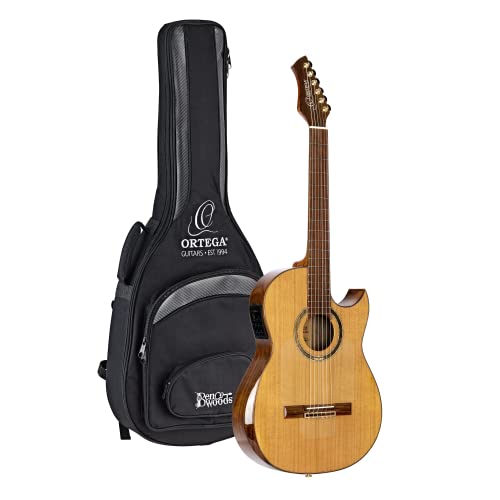
Ortega Ben Woods Signature Series - Solid Top Thinline Acoustic/Electric Nylon Classical Guitar w/Bag (FLAMETAL-TWO)
Included for 'Best Flamenco Guitars for Every Skill Level' as a relevant option in this category; details come from the product listing.
View on AmazonShortlist by playing situation
| Player or use | Good place to start | Why it fits | Typical price range |
|---|---|---|---|
| Beginner, mostly practicing at home | Yamaha CG172SF | Purpose-built flamenco design, a fitted golpeador, and predictable availability make it a sensible first instrument. | About $300–$500 |
| Intermediate player wanting a step up | Cordoba F7 | A solid-top flamenco model offering a more responsive feel than many all-laminate starter guitars. | About $500–$900 |
| Player needing amplification | Cordoba GK Studio | Its built-in electronics are useful for rehearsal and performance without adding a separate soundhole pickup. | About $700–$1,100 |
| Experienced player prioritizing individual feel | Hand-built or luthier-built flamenco guitar | Allows more specific choices in neck shape, action, body wood, and tonal character. | Often $1,500 and up |
Model specifications and availability can change, and individual instruments differ. Confirm the current version’s construction, electronics, and included protection before buying. If possible, try the exact guitar: setup matters enough that two examples of the same model may feel different.
What the specifications mean in practice
| Model or type | Top / body construction | Scale length | Golpeador | Best fit |
|---|---|---|---|---|
| Yamaha CG172SF | Solid spruce top; cypress back and sides | 650 mm | Factory-fitted | Budget-conscious beginner or home player |
| Cordoba F7 | Solid spruce top; flamenco-style body woods vary by version | 650 mm | Factory-fitted | Developing player seeking a more responsive instrument |
| Cordoba GK Studio | Solid European spruce top; rosewood back and sides | 650 mm | Factory-fitted | Amplified playing and a fuller, more rounded voice |
| Traditional blanca-style guitar | Often spruce top with cypress back and sides | Commonly 650 mm | Usually fitted or added | Bright, quick response and a lighter feel |
Listed weights are uncommon and can vary with finish, hardware, and measurement method, so a single precise figure is not a dependable way to compare these models. In general, cypress-bodied blancas tend to feel lighter than many rosewood-bodied guitars. If shoulder comfort or long practice sessions matter, compare actual instruments while seated and standing rather than relying on wood names alone.
Choose body woods for response, not prestige
Spruce tops commonly deliver a crisp attack and clear separation between fast notes. That can help picado passages stay defined and make rhythmic accents speak quickly. Cedar tops often have a warmer, rounder response, which some players prefer for a fuller sound at moderate volume. These are tendencies, not guarantees: bracing, construction, setup, and the individual piece of wood all affect the result.
Cypress back and sides are associated with the traditional blanca sound: relatively light, bright, and quick to respond. Rosewood-bodied guitars often sound fuller, with more sustain and bass presence, though they may feel heavier. A heavier guitar is not automatically louder or better. For rapid dance accompaniment and a dry, percussive character, a light cypress guitar may suit you; for a broader voice or amplified work, a rosewood model can be a useful alternative.
Action, weight, and golpeador: the practical trade-offs
- Action: Low action can make fast runs and barre chords easier, but aggressive right-hand playing may cause more buzz. Ask a seller or technician to check the setup rather than assuming the lowest possible strings are ideal.
- Weight: A lighter body can be more comfortable for long sessions and often suits the quick feel players seek in a blanca. Balance and body shape matter too; test the guitar in your usual playing position.
- Golpeador: The clear or translucent plate protects the soundboard from golpe taps. Check that it covers the area your fingers strike and has no lifting edges. If the guitar lacks one, have a correctly fitted flamenco protector installed; careless application can damage the finish.
- Top and finish: A solid top can respond more dynamically than a laminate top, but it is also more sensitive to humidity changes and knocks. Store the guitar in a case when practical and avoid leaving it in a hot car.
Some buzz is part of a low-action flamenco setup, especially when strings are attacked hard. Persistent rattling across many frets, notes that choke out, or a sudden change in action may indicate a setup or humidity problem. Have a guitar technician assess it before trying to lower the saddle yourself.
Match the guitar to your budget and use
| Your situation | Recommended direction | What to compromise on |
|---|---|---|
| Under about $500; learning technique | Reliable entry-level model such as the Yamaha CG172SF | Expect simpler appointments; prioritize comfortable setup and protection over decorative details. |
| About $500–$1,100; practicing several times a week | Solid-top model such as the Cordoba F7, or GK Studio if amplification matters | Choose tonal character and fit; do not pay extra for electronics you will not use. |
| Frequent performance; established technique | Try several higher-grade instruments, including luthier-built options | Allow budget for a professional setup and a suitable case, not just the guitar. |
| Uncertain about flamenco commitment | Buy a well-set-up, protected mid- or entry-level instrument | Avoid stretching for an expensive guitar before you know your preferred neck feel and tone. |
A useful ownership calculation is to include setup and protection in the purchase budget. For example, if a guitar costs $600 and a technician setup plus a missing golpeador costs $100, the effective first-year outlay is $700—not $600. Exact service charges vary by location, but this comparison helps prevent a bargain instrument from becoming more expensive than a ready-to-play alternative.
Final picks
Best for most beginners: Yamaha CG172SF, provided its neck and action feel comfortable in person. Best step-up direction: Cordoba F7 for a player ready to invest in a more responsive solid-top instrument. Best for plug-in use: Cordoba GK Studio, if you need onboard electronics and prefer its fuller rosewood character. For advanced players, a carefully chosen luthier-built guitar is worth considering only after you can describe the action, weight, and tonal response you want.
Whichever you choose, inspect the golpeador, listen for even response across the strings, and check that fretted notes remain clear at the action you prefer. A comfortable setup and a sound that encourages you to practice matter more than a specification sheet alone.

Write Your Review
No reviews yet. Be the first to share your experience!