
Our Top Picks
 Shimano Fishing Ultegra 14000Xs E Surf ReelsGear Ratio: 4.3:1 | Size: 140001 x 1 x 1 inches2.35 poundsCheck on Amazon


A surf reel lives a harder life than almost any other spinning reel. It gets dunked by waves, blasted with wind-blown sand, loaded with heavy sinkers and big baits, and then asked to cast those rigs as far as possible, again and again. Freshwater reels rarely survive a season of it, and inshore reels can run short on capacity when a strong fish runs along the beach.
This guide compares five surf reels that cover the main ways anglers fish from shore: a long-cast model with a tapered spool, a fully sealed reel for wading and spray, a large-capacity reel for big baits, a mid-size reel for lighter rigs, and a budget baitfeeder reel with a spare spool. Each pick is matched to a job, so start with how and where you fish, then check capacity and sealing for that style.
As an Amazon Associate, we earn from qualifying purchases.
Quick answer
For pure casting distance, the Shimano Ultegra XSE 14000 leads with its long-stroke spool and slow oscillation line lay. Anglers who wade should look at the fully sealed Van Staal VR50. For big baits and long runs, the Daiwa BG 8000 brings the most capacity, the Penn Spinfisher VI 4500 suits lighter rigs, and the KastKing Sharky Baitfeeder III 6000 is the budget pick.
Shimano Ultegra XSE 14000
The Ultegra XSE 14000 is Shimano’s dedicated long-cast surf reel, built around one idea: spool shape and line lay decide how far a bait or lure travels. It uses a long-stroke spool with a tapered lip, so line leaves in smaller, smoother coils with less friction. Super Slow 5 oscillation moves the spool very gradually, laying line in tight, even wraps that reduce friction and wind knots.
The specification fits serious beach work. The 14000 size runs a 4.3:1 gear ratio retrieving about 41 inches of line per turn, giving cranking power for heavy sinkers rather than raw speed. Capacity is generous: 600 yards of 12-pound monofilament or 550 yards of 40-pound braid. Maximum drag is rated at 44 pounds, the CI4+ body keeps weight near 20.6 ounces, and the bearing count is 4+1, with X-Protect water resistance guarding the line roller and body joints.
This reel suits distance casters fishing open beaches for striped bass, red drum and pompano, where reaching an outer bar decides the day. The honest limitation is that X-Protect is water resistance, not full sealing. It shrugs off spray and rain, but it is not built to be cranked underwater, so anglers who dunk their reels should pick a sealed model instead.
Van Staal VR50 Spinning Reel (Silver)
The Van Staal VR50 takes the opposite approach to surf durability: instead of resisting spray, it is sealed so thoroughly that saltwater and sand stay outside the parts that matter. The body and spool use a fully sealed, waterproof design, and the body is machined from 6061 aluminum rather than cast, keeping the frame rigid under load. A stainless steel spiral-bevel gear system and a solid stainless main shaft handle the cranking, and the drag is a sealed carbon system with a fine MicroClick adjustment knob.
The VR50 is compact for its class. It weighs only 8.9 ounces, runs a fast 6.3:1 gear ratio that picks up 37 inches of line per turn, and produces up to 25 pounds of drag. Capacity is about 360 yards of 20-pound braid or 240 yards of 10-pound monofilament, enough for most surf plugging and light bait work. A bail-less conversion kit is also included, a preference among surfcasters who plug at night.
The VR50 suits anglers who wade waist-deep, fish jetties in breaking spray, or want a reel that tolerates being dropped in the wash and rinsed later. Its limitations are capacity and casting geometry. The compact spool is not a long-stroke distance design, so casting range trails the Ultegra class, and the spool fills quickly if you need long runs of heavy line. It is a tool for active surf fishing, not a winch for shark rigs.
Daiwa BG 8000
The Daiwa BG 8000 is the heavy lifter of this group, the reel to choose when the plan involves big cut baits, heavy sinkers and fish that take line in long runs. The 8000 is the largest size in the long-running BG series. Its black anodized machined aluminum body, called HardBodyz construction, houses an oversized Digigear drive gear, larger than typical for the class and the source of much of its cranking strength. The Air Rotor reduces rotational weight, and the spool is a dynamic-cut aluminum design that is braid ready.
The numbers explain its role. The gear ratio is 5.3:1 with a fast 53.3 inches of line recovered per turn, useful for picking up slack quickly. Capacity is the headline: about 550 yards of 20-pound monofilament, or roughly 590 yards of 65-pound braid, so a shark, ray or big drum can run hard without emptying the spool. Maximum drag is 33 pounds from the waterproof Carbon ATD drag system, the bearing count is 6+1, and the bail on this size is manual-trip only. Weight is 30 ounces, a fair trade for the capacity.
The BG 8000 suits beach anglers targeting sharks from shore, big rays, bull red drum and large catfish in tidal rivers. The honest limitation is sealing. The drag is waterproof, but the body is not a fully sealed, rated design, so dunkings and sand will eventually work grit into the mechanism. Treat it as a tough workhorse that needs basic care.
Penn Spinfisher VI 4500
Not every beach session needs a giant reel. For lighter rigs, smaller baits and lures, the Penn Spinfisher VI 4500 hits a useful middle ground. It sits in the 4500 size class, weighs just 12.5 ounces, and balances far better on the 8- to 10-foot rods used for whiting, pompano, school striped bass and bluefish than the big surf sizes do.
The specification is well matched to that work. A 6.2:1 gear ratio retrieves about 40 inches of line per turn, quick enough to keep contact with a jig or rig in the current. Capacity runs to roughly 425 yards of 8-pound monofilament or 320 yards of 20-pound braid, plenty when runs are short. Maximum drag is 20 pounds from Penn’s HT-100 carbon fiber washers, housed in a sealed spool, and the full metal body carries IPX5 sealing for the gearbox and drag system. The bearing system is 5+1 stainless steel, and this size keeps an automatic bail trip.
The Spinfisher VI 4500 suits anglers who walk the beach casting as they go, fish piers and inlets, or want one sealed reel covering light surf and inshore duty. Its limitation is simply size. It runs out of line and leverage quickly against big baits, heavy sinkers and the long runs of large drum or sharks, where 8000-class reels are the right tool.
KastKing Sharky Baitfeeder III 6000
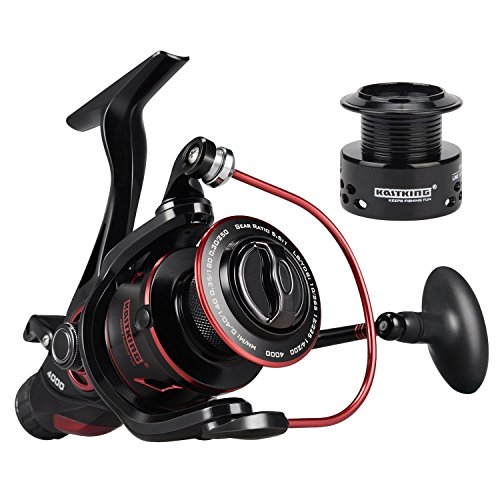
The Sharky Baitfeeder III 6000 is the budget entry here, and it earns its place with two features surf bait anglers genuinely use. The first is its baitfeeder system: a rear secondary drag lets a fish pick up a live or cut bait and move off with little resistance, then a turn of the handle engages the main front drag for the fight. The second is the spare spool: a high-strength graphite spare sits alongside the main CNC aluminum Shark Fin braid-ready spool, so one spool can carry monofilament and the other braid.
The rest of the specification is solid for the class. The 6000 size runs a 5.5:1 gear ratio, uses 10+1 shielded stainless steel ball bearings, and the carbon fiber drag is rated up to 26.5 pounds. The body is high-modulus graphite, which keeps the reel light for its size, and the main shaft is oversized stainless steel. KastKing rates the reel for freshwater and saltwater use, and the handle converts between left- and right-hand retrieve.
This reel suits new surf anglers, occasional beach fishers, and anyone setting out a second or third bait rod on a budget, including catfish and carp anglers in fresh water. The honest limitation is refinement and sealing. The graphite frame flexes more under heavy drag than the metal bodies above, the intrusion protection is basic rather than a rated seal, and a rinse after every saltwater trip is not optional if it is going to last.
How to choose
Start with spool geometry, because casting distance comes from the spool and the line lay more than from any drag figure. A long-stroke, tapered spool lets line peel off in orderly coils, and slow oscillation wraps line so evenly that those coils stay small and slip free. If reaching a distant bar decides your fishing, that design matters more than extra drag.
Next, be honest about sealing. Sand and spray kill unsealed reels within a season or two, because grit in the gearbox grinds gears and roughens bearings with every handle turn. If you fish from a dry sand spike and rarely get wet, a well-made unsealed reel with a waterproof drag can serve for years. If you wade, fish jetties, or fish in rain and breaking surf, a sealed body and spool become the difference between a reel that lasts and one that does not.
Capacity must match the beach in front of you. A reel that holds your chosen line plus a long run beats a stronger drag you cannot use, because drag only works while line remains on the spool. Open beaches with big fish call for 400 yards or more of braid. Bays and inlets with modest fish are fine with half that, and the smaller reel casts lighter rigs better.
Finally, rinse discipline matters more than price tier. Every reel here lasts longer with the same routine: a gentle freshwater rinse after saltwater use, never a hard jet that drives salt deeper, a drop of oil on the line roller and handle joints, and storage with the drag backed off. An affordable reel that gets rinsed will outlive an expensive sealed reel thrown, wet and sandy, into a garage corner.
Who should skip
Skip these spinning picks if you prefer a conventional surf reel. Conventional surf reels give experienced casters direct spool control and strong capacity in a compact frame for heavy bait work, at the cost of a real learning curve and the occasional backlash. If that is already your style, nothing here replaces it.
Also skip the surf category entirely if your fishing is freshwater lakes and rivers. The capacity, corrosion protection and drag range of surf reels are wasted weight there, and a lighter freshwater spinning reel in the 2500 to 4000 sizes will cast better, balance better, and tire your arm far less over a long day.
Frequently Asked Questions
What size surf reel is best for most beach fishing?
A 6000 to 8000 size reel is the most versatile starting point for general surf fishing, holding enough line for long casts and honest runs while balancing on common 10- to 12-foot surf rods. Drop to a 4500 or 5000 size for light rigs and lures, and step up to the largest sizes when big baits and sharks are the target.
Does a long-cast spool really add distance?
Yes, within limits. A long-stroke spool with a tapered lip and even line lay reduces the friction of line leaving the spool, one of the main brakes on a cast. It will not rescue poor technique or a badly matched rod and sinker weight, but on the same rod and line it consistently out-casts a standard deep spool.
Can surf reels be used in freshwater?
They can, and many anglers use larger surf reels for catfish and carp, where the capacity and drag are useful. The trade-off is weight and bulk. For ordinary freshwater fishing with light lures, a smaller reel is more comfortable and casts light rigs more accurately, so keep the surf reel for the beach and heavy work.
How often should a surf reel be serviced?
Rinse after every saltwater trip, and plan on a deeper clean with fresh grease and oil at least once a season, or sooner if the handle feels gritty or the bail gets stiff. Fully sealed reels need less frequent internal attention, but line rollers, drag washers and handles still benefit from inspection, since those parts live outside the seals.
Final verdict
Match the reel to the water you actually fish. The Shimano Ultegra XSE 14000 is the distance specialist for open beaches, the Van Staal VR50 is the sealed choice for wading and spray, and the Daiwa BG 8000 is the capacity pick for big baits and long runs. Lighter beach work is better served by the Penn Spinfisher VI 4500, while the KastKing Sharky Baitfeeder III 6000 covers budget bait fishing with a spare spool included.
Product and ASIN Reference
| Product | ASIN |
|---|---|
| Shimano Ultegra XSE 14000 | B09Z11GYT7 |
| Van Staal VR50 Spinning Reel (Silver) | B079VRB13R |
| Daiwa BG 8000 | B01JH8FHQC |
| Penn Spinfisher VI 4500 | B07GKG5LQS |
| KastKing Sharky Baitfeeder III 6000 | B0746HBYGJ |
FAQ
What size surf reel is best for most beach fishing?
Does a long-cast spool really add distance?
Can surf reels be used in freshwater?
How often should a surf reel be serviced?
More from Amazon
Programs that pair well with the guide above. Offers and eligibility are set by Amazon and may change.
Free shipping on eligible items, Prime Video and more. Eligible new members can start with a free trial.
Start a Prime free trialA Prime membership for ages 18-24 with a trial period. Eligibility is set by Amazon.
See Prime for Young AdultsAudiobooks and podcasts to listen to on the go. Eligible new members can start with a free trial.
Try Audible freeAd-free music streaming. Eligible new subscribers can start with a free trial.
Try Music Unlimited freeAs an Amazon Associate we earn from qualifying purchases.
Write Your Review
No reviews yet. Be the first to share your experience!